
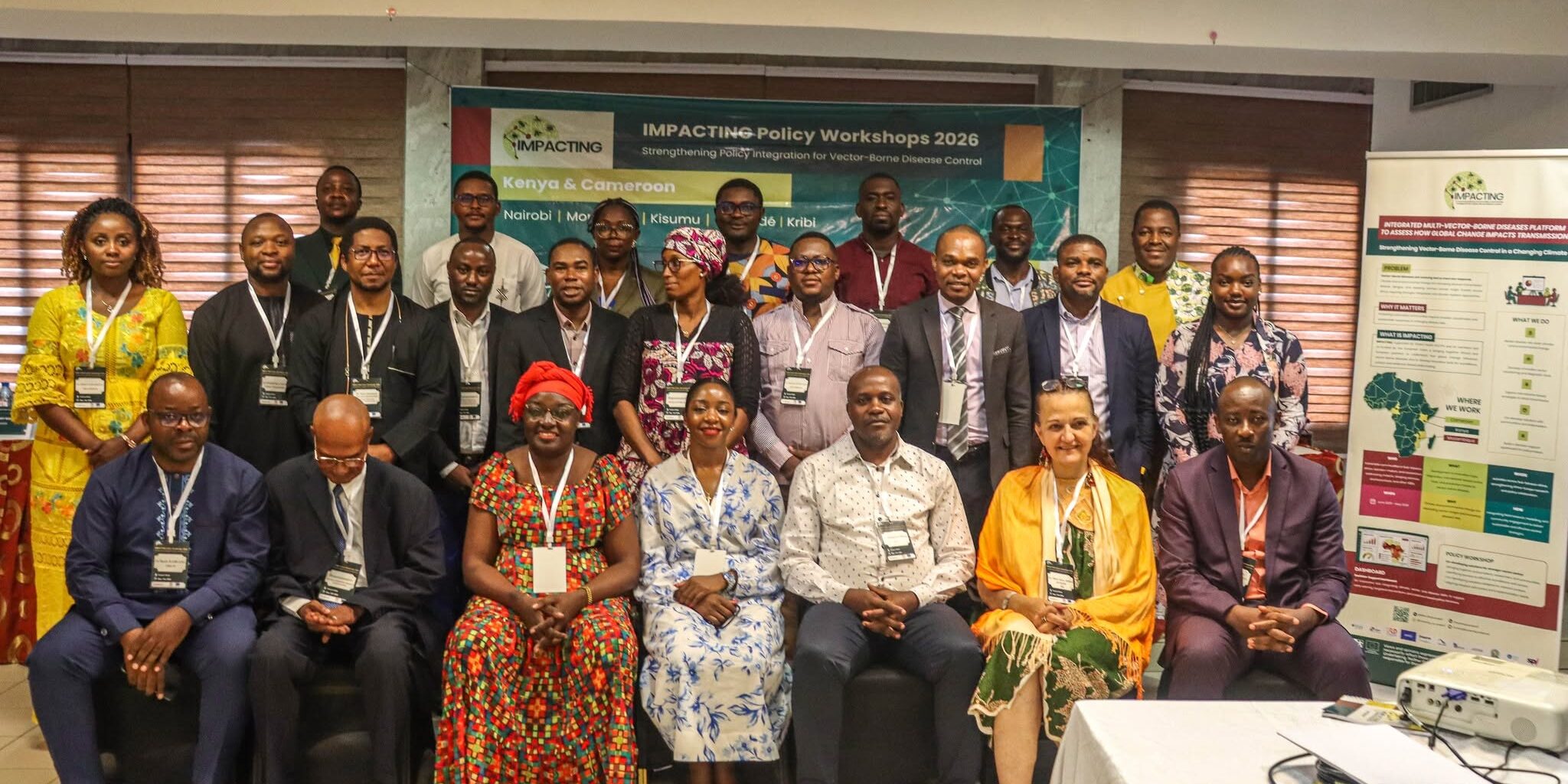
This session focusing on the central and regional level was held on May 13, 2026 at the Franco hotel of Yaoundé, Cameroon.
Convened by the Centre for Research in Infectious Diseases (CRID) in collaboration with project partners, the workshop brought together key national stakeholders to strengthen dialogue, align priorities, and promote more integrated approaches to disease surveillance and control. Gathering representatives from government ministries, national health programmes, research institutions, civil society, and development partners, the workshop provided a dynamic platform for knowledge exchange and collaboration. During the workshop, participants emphasized that climate change, rapid urbanisation, environmental degradation, and population mobility are reshaping disease transmission patterns. These evolving dynamics are expanding the geographical range of disease vectors, increasing transmission risks, and placing additional pressure on already strained health systems. As a result, there is an urgent need for more adaptive, integrated, and forward-looking public health strategies.
Strengthening Policy Dialogue and National Coordination
A central objective of the workshop was to strengthen engagement between policymakers, researchers, and public health practitioners. Discussions focused on identifying policy and operational gaps while ensuring that ongoing research and innovation initiatives align with national priorities. Participants highlighted several systemic challenges affecting vector-borne disease control efforts. These included weak entomological surveillance systems, fragmented coordination mechanisms, and limited integration of environmental and climate data into public health decision-making. The lack of sustained domestic funding and the reliance on external support were also raised as key concerns affecting the sustainability of interventions. Another major issue discussed was the reactive nature of existing surveillance systems. Many interventions are implemented only after outbreaks occur, limiting the ability to anticipate and prevent disease transmission. Participants stressed the importance of transitioning toward more predictive and proactive surveillance systems capable of supporting early warning and rapid response.
Key Technical Insights from the Workshop
The workshop featured a series of technical presentations that provided a comprehensive overview of the epidemiological situation of vector-borne diseases in Cameroon. Experts highlighted the ongoing burden of diseases such as malaria, which continues to account for millions of cases annually, as well as the emergence of arboviral threats in urban settings. Discussions also explored the environmental and climatic drivers of disease transmission. Rising temperatures, increased rainfall variability, and poor urban infrastructure were identified as key factors contributing to the proliferation of disease vectors. In addition, land-use changes, deforestation, and agricultural practices were shown to influence vector habitats and increase human exposure to disease risks.
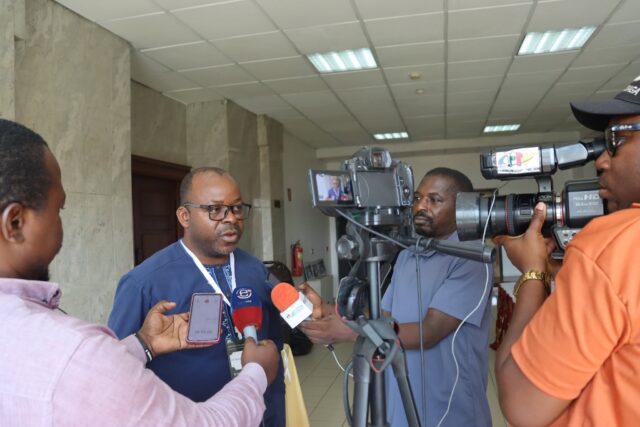
Dr Basile Kamgang, Principal Investigator of the project in Camroon
The workshop also provided an opportunity to present the objectives and innovative approaches of the IMPACTING Project. Participants were introduced to the project’s multidisciplinary framework, which integrates epidemiology, modelling, entomology, and digital technologies to improve disease surveillance and control. A key innovation discussed was the development of a community-led SMS-based surveillance system designed to enhance early warning, disease reporting, and real-time monitoring at the community level. This approach aims to bridge critical gaps in data collection and strengthen connections between communities and health systems. In addition, the project is developing a decision-support dashboard that will integrate multiple data streams to support risk prediction and evidence-based policymaking. This tool is expected to improve the ability of decision-makers to respond effectively to emerging public health threats.
The Importance of Multisectoral Collaboration
A recurring theme throughout the workshop was the need for stronger collaboration across sectors. Participants emphasized that effective prevention and control of vector-borne diseases cannot be achieved by the health sector alone. The discussions highlighted the importance of involving environmental agencies, agricultural institutions, local authorities, and research organisations in a coordinated effort. The adoption of a One Health approach, which recognizes the interconnection between human, animal, and environmental health, was widely recommended as a critical framework for addressing the complexity of vector-borne diseases.
The workshop concluded with a strong consensus on the need to strengthen integrated and climate-sensitive surveillance systems. Participants emphasized the importance of reinforcing entomological monitoring capacities, improving the integration of environmental data into health systems, and increasing investment in research and innovation. There was also a clear call to enhance community engagement in surveillance and control activities, improve access to healthcare services in underserved areas, and promote evidence-informed policymaking. Increasing domestic resource mobilisation and strengthening government ownership were identified as key priorities to ensure the sustainability of interventions.