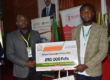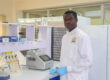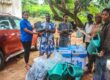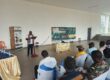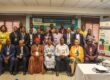


Conducted from 28 September to 1 October 2026, the workshop aimed to equip frontline health workers with the practical skills needed to strengthen malaria vector surveillance and support evidence-based decision-making for malaria control
The Centre for Research in Infectious Diseases (CRID) successfully organized an intensive training programme on the bCUBE system for field deployment, bringing together health district personnel from six pilot districts across Cameroon: Dibombari, Lagdo, Esse, Mbandjock, Foumbot, and Tibati. The opening ceremony was presided over by Dr. Zeh Meka, Permanent Secretary of Cameroon’s National Malaria Control Programme (NMCP), and Prof. Charles Wondji, Principal Investigator of the project. In his opening remarks, Dr. Zeh Meka emphasized the critical role of surveillance in malaria elimination efforts, encouraging participants to fully engage in the training. “Without surveillance, no concrete action can be taken. Field surveillance enables us to develop appropriate responses and move away from outdated methods. We want and we need to advance towards malaria elimination,” he stated.
Designed to combine theory with hands-on practice, the training provided participants with comprehensive knowledge and practical experience in mosquito surveillance and molecular diagnostics. Participants learned best practices for mosquito collection, handling, conservation, and labelling in field settings. Particular emphasis was placed on the identification of mosquito species, including distinguishing Anopheles mosquitoes from other genera, recognizing male and female specimens, and identifying blood-fed females that are particularly relevant for surveillance activities, using visual identification and Vector-Cam, a digital tool that supports mosquito identification.
Mastering Laboratory Techniques and Molecular Diagnostics
A significant component of the training focused on laboratory techniques required for molecular analysis. Participants acquired practical skills in pipetting, specimen processing, sample traceability, DNA extraction, and PCR amplification. They were trained on appropriate procedures for handling different mosquito specimens and learned the importance of maintaining high standards of biosafety and laboratory practice throughout the analytical process.
The training further familiarized participants with the operation of the bCUBE molecular platform, a portable technology designed to bring molecular diagnostics closer to the field. Participants learned how to prepare and run experiments, set up the platform in field conditions, and interpret results generated by the system. They were introduced to a range of applications, including Anopheles species identification, blood meal detection sources, Plasmodium detection, and the detection of insecticide resistance markers.
From the Laboratory to the Field
The programme culminated in a field application exercise in Mbandjock, where participants translated their newly acquired knowledge into practice. Working under real-world conditions, they assembled mosquito holding cages, collected mosquito specimens using Prokopack aspirators, set-up the bCUBE platform, conducted field experiments, and analyzed data generated from their experiments. At the conclusion of the training, each participant received a complete bCUBE deployment kit, ensuring that they returned to their respective health districts equipped to implement the techniques and technologies introduced during the programme.
Reflecting on the experience, Sarah Kake, Medical and Health Technical Officer from the Dibombari District Hospital, said: “I am grateful to the partnership between the NMCP and CRID for giving us the opportunity to be among the first district actors in the bCUBE project. Big thanks to Prof. Wondji and his team. With all I have learned, I am now capable of identifying different species of mosquitoes, proceeding with the main procedures to extract specimen DNA, and detecting parasites using the bCUBE machine.”
Advancing Towards Malaria Elimination
The training was facilitated by a multidisciplinary team led by Dr. Armel Tedjou, Project Coordinator. Their expertise provided participants with both the theoretical foundation and technical competencies required for successful field deployment of the technology.
By empowering district-level health personnel with advanced surveillance tools and practical expertise, this training marks an important step toward strengthening community-based malaria surveillance in Cameroon. After these 6 pilot districts, more will be trained with an aim to supporting the country’s progress toward malaria elimination.