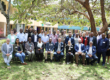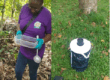

In-depth interview conducted in Mokolo, Far North Region of Cameroon.
This project is awarded to Dr Lili Mbakop, a Post-doctoral Research Assistant at CRID. Her work focuses on strengthening the understanding of neglected tropical diseases through integrated and community-centred approaches. Through this project, Dr Mbakop seeks to generate evidence that will improve the surveillance and control of cutaneous leishmaniasis in Northern Cameroon while promoting meaningful community engagement in disease prevention and response.
Cutaneous leishmaniasis is a neglected tropical disease that remains endemic in several foci of the Extreme-North Region of Cameroon, particularly in and around Mokolo. Characterised by chronic skin ulcers and, in some cases, prolonged fever, the disease disproportionately affects vulnerable rural and pastoral communities. Despite its significant public health burden, local knowledge, health-seeking behaviours, and the full transmission dynamics, including the role of sandfly vectors, remain poorly documented in this setting.
Through funding from the Royal Society of Tropical Medicine and Hygiene (RSTMH), Dr Mbakop will lead a one-year project aimed at investigating the ecological, entomological, and community determinants of leishmaniasis in the Mokolo focus. The grant, valued at £5,000, will run from December 2025 to December 2026, supporting field investigations and stakeholder engagement activities designed to strengthen leishmaniasis surveillance and response in endemic communities. For Dr Lili Mbakop, “The most effective and sustainable surveillance systems for leishmaniasis are not designed in laboratories alone, but are co-created with the very communities living with the disease, where local knowledge, household realities, and entomological evidence come together to build a truly participatory One Health approach.”
Core Aim
The primary aim of this project is to generate a comprehensive understanding of the ecological, entomological, and social factors driving leishmaniasis transmission in the Mokolo focus of Northern Cameroon. By combining vector studies, community-based research, and stakeholder engagement, the project will co-develop a sustainable and context-adapted participatory One Health surveillance framework. This approach will help improve early detection, reporting, and response mechanisms while ensuring that local communities play a central role in disease surveillance and control.
Expected Outcomes
This project is expected to generate critical evidence on the ecological and entomological drivers of leishmaniasis transmission, as well as community perceptions, health-seeking behaviours, and barriers to care in endemic settings. Through close collaboration with communities and stakeholders, it will establish the foundations for a participatory surveillance framework that strengthens early detection and response to leishmaniasis.
Beyond its immediate research outputs, the project will empower affected communities by integrating local knowledge into surveillance strategies and fostering greater ownership of disease control efforts. The resulting framework is expected to provide a scalable and replicable model for participatory surveillance of neglected tropical diseases in Cameroon and other similar endemic settings across the region.