Researchers, public health professionals, policymakers, and international partners gathered in Yaoundé for two major events under the IMPACTING Project, reinforcing regional collaboration and advancing innovative approaches to vector-borne disease surveillance and control across Africa.

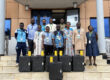
Family picture
IMPACTING Consortium Reviews First-Year Progress
From 5 to 7 October 2026, the Integrated Multi-vector-borne Diseases Platform to Assess how Global Change Impacts Transmission using Innovative Systems Modeling, Novel Monitoring Tools, and Transmission Blocking Micro-organisms (IMPACTING) Project held its Year 1 Annual Progress Meeting at the Concord Hotel in Yaoundé, Cameroon.
Funded by the European Commission through the Global Health EDCTP3 Programme, the meeting brought together consortium partners, scientists, and members of the External Advisory Board to review achievements from the project’s first year, discuss challenges encountered during implementation, and define priorities for the next phase of activities.
The meeting was coordinated by Dr. Basile Kamgang, CRID Focal Point; Dr. Antoine Barreaux, Principal Investigator of the IMPACTING consortium; and Dr. David Tchouassi. In his opening remarks, Prof. Charles Wondji, Executive Director of CRID, highlighted the increasing threat posed by vector-borne diseases in Africa and emphasized the importance of innovative technologies, multidisciplinary research, and strong international partnerships in strengthening disease surveillance and control.
Throughout the three-day meeting, partners presented updates on progress across the project’s work packages, including innovative tools for arbovirus surveillance, stakeholder engagement activities, project management, ethics and compliance, and capacity-building initiatives. A dedicated session also showcased the work of five PhD students affiliated with partner institutions, including CIRAD, icipe, the Centre Pasteur du Cameroun (CPC) and the University of Dschang. Among the students presenting their research were Nathan Nguema and Steve Messi from CRID.
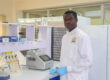
The final day featured discussions on project management and reporting requirements, followed by recommendations from the project’s External Advisory Board (EAB) aimed at strengthening scientific outputs and ensuring successful implementation during the second year of the project. Participants also visited CRID’s research facilities in Yaoundé, including its molecular laboratories and insectaries, providing consortium members with valuable insight into the infrastructure supporting vector-borne disease research in Cameroon.
Stakeholders Co-Design a Multi-Vector Disease Surveillance Dashboard
Building on the annual meeting, the IMPACTING Project convened a co-design workshop on 9 October 2026, also held at the Concorde Hotel in Yaoundé, to advance the development of a multi-vector-borne disease surveillance dashboard under Work Package 5.
The workshop brought together researchers, public health experts, representatives of national disease control programmes, ministries, universities, and partner organizations to contribute to the design of a digital platform intended to improve evidence-based decision-making.
The dashboard will integrate surveillance data from Cameroon, Kenya, and Mozambique, while building on existing health information systems such as DHIS2. Planned functionalities include risk visualization, disease monitoring, reporting tools, early warning alerts, and integrated data analysis capabilities.
Through interactive discussions and group exercises, participants identified user needs, validated key requirements, and prioritized functionalities for the dashboard’s first version. The workshop ensured that the platform’s development is guided by the practical needs of health authorities, researchers, and programme managers who will ultimately use the system.
Advancing Innovation for Better Disease Surveillance
Together, the annual progress meeting and dashboard co-design workshop highlighted the IMPACTING consortium’s commitment to strengthening surveillance systems, fostering scientific collaboration, and developing innovative tools to address the growing challenges posed by vector-borne diseases.
By bringing together expertise from across Africa and Europe, the project continues to lay the foundations for more integrated, data-driven approaches to disease monitoring and public health decision-making across the continent.