
Many patients with fever and negative malaria result often leave hospitals without knowing what other infectious disease could be the cause. Very often their sickness is caused by mosquito-borne virus that are unaware of which delayed outbreak detection and response. Through cutting-edge local surveillance, genomics, and diagnostics, this new project will protect Cameroonians today and strengthen Africa’s preparedness for tomorrow against the arboviral diseases.
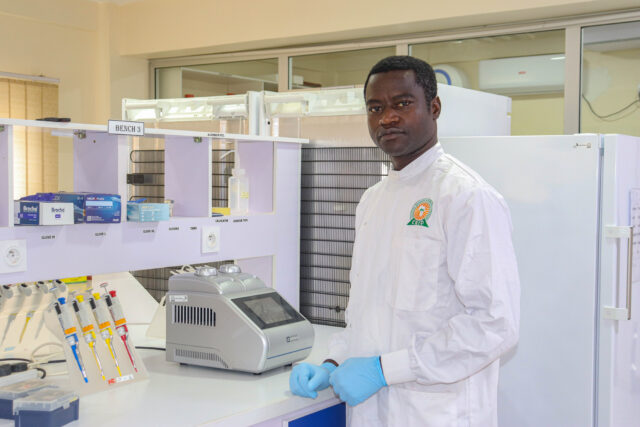
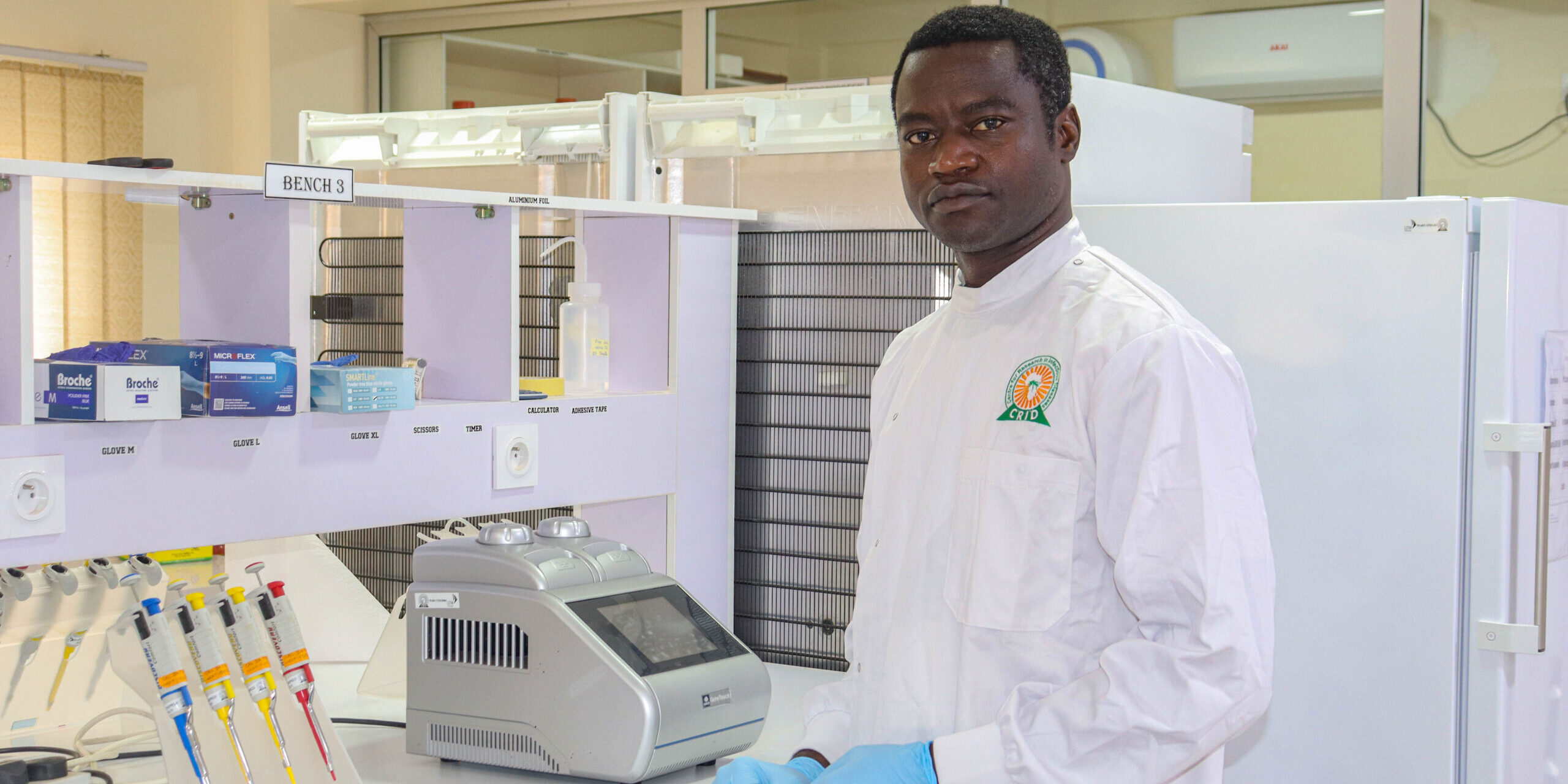
Dr. Simo Nemg Fredy Brice conducting research in the CRID laboratory.
The Research Project objective
Entitled “Understanding Adaptation and Transmission Dynamics of Arboviruses in Cameroon,” Dr Frédy Nemg’s project addresses an urgent yet under-recognized national health challenge. Arboviral diseases including dengue, chikungunya, Zika, yellow fever, and Crimean-Congo haemorrhagic fever all pose a high and growing risk, driven by climate change, abundant mosquito vectors, wildlife reservoirs, and rapid urbanisation, all of which create ideal conditions for transmission. This Wellcome Early-Career Award (Wellcome Trust ECA) is a fellowship that will be carried out at the Centre for Research in Infectious Diseases (CRID). Here, Dr Fredy Nemg, who is a Postdoctoral Research Assistant, will work under a supervision team consisting of …
The project will establish an integrated surveillance platform linking epidemiology, genomics, immunology, and diagnostic innovations to improve the detection and understanding of arboviruses responsible for unexplained febrile illnesses. Working closely with hospitals across Cameroon, the research team will recruit patients presenting with acute fever and analyse clinical samples using state-of-the-art molecular and serological techniques, including RT-qPCR, antibody detection, and whole-genome sequencing. This work will be conducted collaboratively with the Centre for Virus Research, University of Glasgow in UK. This collaboration was made possible during the AREF fellowship placement of Dr Simo.
Knowledge exchange is a central pillar of the project. Through intensive training of young scientists, strengthening of laboratory infrastructure, technology transfer, and close collaboration with hospitals and the Ministry of Public Health, the programme will build sustainable national expertise in arbovirus surveillance and diagnostics. Surveillance data and research findings will be rapidly shared with public health authorities to support timely decision-making and outbreak preparedness. «This project is about much more than generating scientific data,” says Dr Simo Nemg. “It is about building sustainable scientific capacity, improving patient care, and equipping Cameroon with the tools needed to detect and respond rapidly to emerging viral diseases.”
Quality Science from Africa preventing brain drain
Dr Simo Nemg’s success builds on a strong CRID tradition of early-career excellence while carving his own path. Inspired by previous Wellcome ECA fellows at the institute, he deliberately expanded his expertise abroad in advanced virological techniques unavailable locally. It was a strategic move that strengthened his application. Reflecting on receiving the award, Dr Nemg remains both humble and ambitious. “I can only express my sincere gratitude to God and to everyone who believed in and supported this journey. It took months for the reality of this achievement to sink in. This award is far more than personal recognition; it is an opportunity to build scientific capacity in Cameroon and contribute knowledge that directly benefits our communities” he adds.
His message to young scientists in Cameroon and across Africa is clear and empowering: “You do not have to leave Cameroon or Africa to become a world-class scientist. Stay curious, be resilient, and never underestimate the importance of the health questions that exist in your own communities.” This can be seen as a subtle yet powerful way of saying that some of the world’s most important scientific discoveries can begin right here in Africa. “I am delighted that Dr Simo Nemg has been awarded this Fellowship through a very difficult process where he competed with the best scientists of his generation from UK universities. His success is a testimony that with hard work, the right environment and dedication, African scientists can excel internationally while based in Africa. It is also a proof that catalytic early funding to early career scientists could significantly improve their competitiveness as Dr Simo had previously been awarded a £10,000 PIIVEC funding (led by LSTM/CRID) and a £45,000 from AREF (CRID/UoG)” Prof Charles Wondji, the executive Director of CRID, acting as sponsor on this Award.