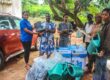

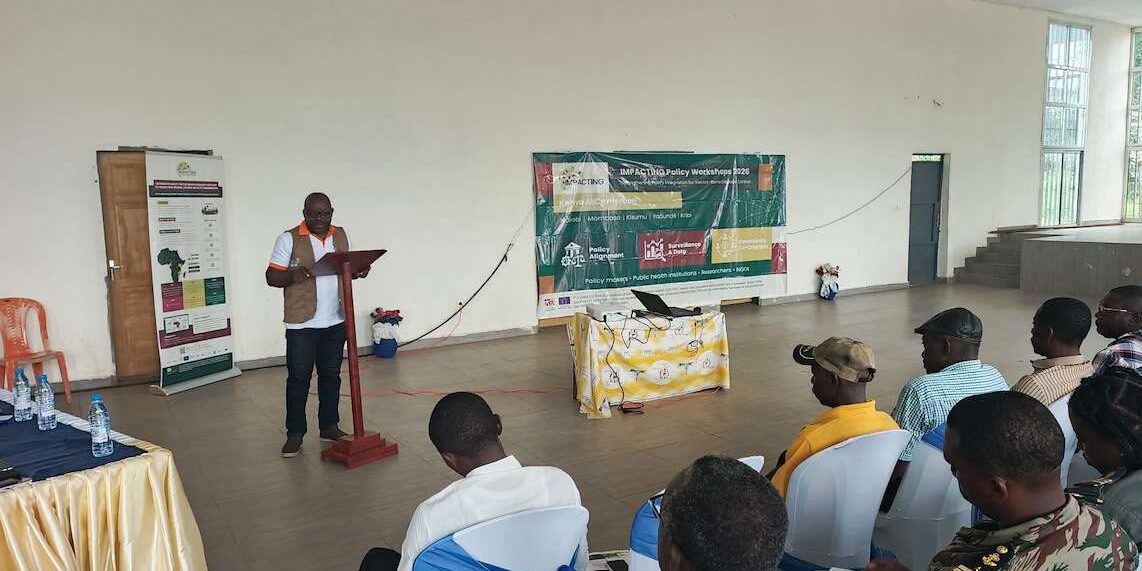
The IMPACTING Project advanced its commitment to community-centered public health through a District and Community-Level Policy Engagement Workshop held in Campo.
Organized by CRID, the workshop brought together local authorities, health professionals, community leaders, and residents to strengthen collaboration and promote local participation in the prevention and control of vector-borne diseases. By creating a platform for dialogue between researchers, health systems, and communities, the workshop marked an important step toward ensuring that disease control strategies are not only scientifically sound but also grounded in local realities and supported by the people they are meant to serve.
Understanding the Local Context of Disease Risk
The Campo area presents a unique and complex environment for vector-borne disease transmission. Located in a highly biodiverse zone characterized by forests, wetlands, and mangroves, the region offers favorable conditions for a wide range of disease vectors. In addition, its proximity to the border with Equatorial Guinea introduces cross-border movement of populations, animals, and vectors, which can influence disease dynamics and complicate control efforts. During the workshop, participants explored how environmental changes, agricultural expansion, and climate variability are shaping the spread of diseases such as malaria and Human African Trypanosomiasis. These factors, combined with existing gaps in surveillance systems and healthcare access, reinforce the need for locally adapted and coordinated interventions.
Many participants highlighted the challenges they face in their daily lives, including mosquito proliferation in swampy areas, limited awareness of certain diseases such as dengue, and difficulties accessing healthcare services due to long distances and poor road conditions. These challenges illustrate the importance of designing interventions that are both context-specific and accessible to all populations. The workshop also provided an opportunity for local health authorities to address concerns directly, reinforcing trust and encouraging stronger collaboration between communities and the health system.
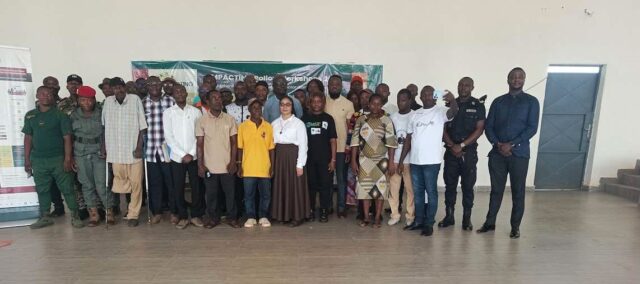
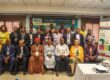
Family picture
Showcasing Innovation in Vector Surveillance and Control
A central feature of the workshop was the presentation of innovative tools designed to improve vector surveillance and control. Participants were introduced to a range of technologies used to monitor mosquito and tsetse populations, including modern trapping systems and data collection tools. These demonstrations generated strong interest among participants, many of whom were encountering such technologies for the first time. The discussions emphasized how these tools can enhance the accuracy of surveillance data, support more effective interventions, and ultimately contribute to reducing disease transmission. In addition to these technologies, the IMPACTING Project presented its broader approach, which combines scientific research with community engagement to develop sustainable and locally adapted solutions.
One of the most valuable aspects of the workshop was the opportunity for community members to share traditional practices used to protect themselves against insect bites. Participants described a range of methods, including the use of plant-based repellents, smoke, protective clothing, and environmental management techniques. These discussions highlighted the importance of recognizing and integrating indigenous knowledge into modern public health strategies. By combining scientific innovation with local practices, interventions can become more acceptable, culturally relevant, and sustainable. The exchange of knowledge also strengthened community ownership of disease control efforts, reinforcing the idea that effective solutions must be co-created with those most affected.
Building Stronger Partnerships for Sustainable Impact
Throughout the workshop, participants emphasized the importance of collaboration among all stakeholders involved in vector-borne disease control. Effective interventions require coordinated action between health authorities, local governments, environmental actors, community leaders, and international partners. The need for cross-border collaboration was also highlighted, given Campo’s location and the movement of vectors and populations across national boundaries. Strengthening partnerships at both local and regional levels will be essential to achieving sustainable public health outcomes.
The Campo workshop demonstrated the power of community engagement in addressing public health challenges. By involving communities in dialogue, decision-making, and implementation, the IMPACTING Project is helping to create more inclusive and effective approaches to disease control.