
On February 24, 2026, Nelly Manuela Tchatchoua Tatchou successfully defended her PhD thesis in the Department of Biochemistry and Molecular Biology at the Faculty of Science, University of Buea.

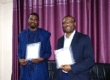
Nelly Tatchou and her supervisors
Her work, titled “Validation of the Role of CYP6P4a and CYP6P4b Genes in Insecticide Resistance in the Major African Malaria Vector Anopheles funestus using Functional Genomics,” was co-supervised by Prof. Ghogomu Stephen (University of Buea) and Prof. Charles Wondji (Liverpool School of Tropical Medicine).
The jury praised the outstanding quality of her research, highlighting its important contribution to malaria control. They particularly commended her development of two new molecular tools that can help detect insecticide resistance in mosquito populations. The candidate’s confidence, clarity, and deep understanding of the subject were highly appreciated.
Understanding the Research
Dr. Tchatchoua’s research focused on a major malaria-transmitting mosquito, Anopheles funestus. In this species, resistance is mainly due to the mosquito’s ability to produce enzymes that break down insecticides before they can act. Two specific genes, known as CYP6P4a and CYP6P4b, were already suspected to play an important role, but their exact contribution had not been fully confirmed. Through her work, the candidate showed that amino acid changes in these genes allow mosquitoes to neutralize insecticides more efficiently. Using both computer simulations and laboratory experiments, she demonstrated that allelic variations of these genes produce enzymes that can break down insecticides much faster than normal.
To confirm these findings, Nelly Tatchou conducted experiments using fruit flies genetically modified to carry these resistant genes and metabolic assays. The results showed that flies with the resistant versions were better able to survive insecticide exposure, and protein from these genes were able to break down the insecticide, clearly demonstrating their role in resistance. Her study also revealed why these genes are so active in resistant mosquitoes, pointing to changes in how they are regulated. This helps explain why some mosquito populations become highly resistant over time.
A Contribution to Malaria Control
One of the major outcomes of this research is the development of two Deoxyribonucleic Acid (DNA)-based diagnostic tools. These tools make it possible to quickly detect resistance-related genetic changes in mosquito populations. Importantly, they can also help determine when insecticide-treated bed nets are becoming less effective in the field. Overall, this work confirms that the CYP6P4a and CYP6P4b genes play a key role in insecticide resistance in Anopheles funestus. By improving our ability to detect and monitor resistance, these findings provide valuable support for malaria control programs across Africa.
Dr. Tchatchoua’s research represents an important step forward in the fight against malaria, offering practical tools and new insights to help protect communities and improve public health outcomes. Throughout her academic journey, Nelly has received several prestigious awards, including being named 2025 L’Oréal-UNESCO For Women in Science laureate for Sub-Saharan Africa, as well as the Best Poster Presentation Award at the 2024 Genomic Epidemiology of Malaria (GEM) Conference.