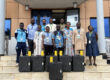

On March 19, 2026, CRID hosted the in-country dissemination workshop of the Resilience Against Future Threats (RAFT) project in Yaoundé, Cameroon. This important event marked a key milestone in sharing the outcomes of a six-year initiative funded by UK International Development.
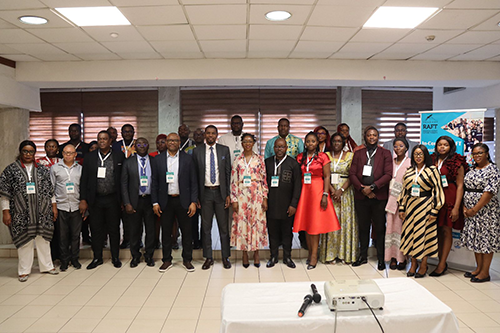
Family picture
Over the course of the project, the RAFT consortium generated critical evidence aimed at strengthening vector control strategies, addressing the growing challenge of insecticide resistance in malaria vectors, and improving preparedness for emerging mosquito-borne threats across sub-Saharan Africa and Southeast Asia. Beyond research outputs, the RAFT project has significantly contributed to building awareness, enhancing technical capacity, and strengthening operational expertise among national vector control programmes, donors, and partners. Particular attention has been given to the increasing public health risks posed by arboviral diseases transmitted by mosquitoes, including dengue and chikungunya.
Strong Stakeholder Engagement and Strategic Discussions
The workshop convened a wide range of key national stakeholders, including representatives from the National Malaria Control Programme (NMCP) and the Department for the Fight Against Diseases, Epidemics and Pandemics (DLMEP). Major partners involved in malaria and vector-borne disease surveillance and control also participated, reflecting a strong national commitment to collaborative action. Through 13 targeted presentations followed by interactive discussions, participants explored several critical issues. These included the escalation of insecticide resistance, which continues to undermine the effectiveness of existing malaria control tools, as well as the country’s preparedness to respond to Aedes-borne viral diseases. The current epidemiological situation of arboviral diseases in Cameroon and the surveillance of the invasive urban malaria vector Anopheles stephensi were also highlighted.
Discussions focused strongly on translating the wealth of data generated by the RAFT project into practical tools for decision-making. Stakeholders emphasized the need to ensure that research findings effectively inform national policies, planning processes, and resource allocation strategies. Notably, Cameroon has already taken steps toward strengthening arbovirus surveillance, including the establishment of sentinel sites and the development of dedicated surveillance guidelines.
RAFT’s Relevance and Contribution to National Systems
Participants consistently recognized the RAFT project as highly relevant to Cameroon’s public health needs. The project has provided robust scientific data that inform national malaria control strategies and Global Fund investments. It has enabled the early detection of molecular resistance mechanisms, allowing for proactive interventions, and has significantly strengthened national and regional capacity through training, surveillance tools, and research studies.
RAFT has also played a crucial role in enhancing decision-making frameworks and updating national guidelines. Its contribution to improving preparedness for arboviral diseases and fostering South–South collaboration through multi-country evidence sharing was particularly valued.
Key Lessons Learnt and National Impact
The RAFT project has generated important lessons for future interventions. These include the rapid evolution of insecticide resistance and the need for continuous genomic surveillance, the effectiveness of next-generation nets in high-resistance settings, and the variability of resistance mechanisms across regions. Operational constraints such as supply chain challenges and limited post-distribution monitoring were also identified as critical issues that could affect sustainability. At the national level, RAFT has made significant contributions to strengthening vector surveillance through the introduction of innovative approaches such as environmental DNA (eDNA) diagnostics. It has enhanced capacity by training national teams in entomology, genomics, and epidemiology, and has improved technical expertise within both government institutions and research organizations.
The RAFT results dissemination workshop in Yaoundé represented a critical step in bridging research and public health action. By bringing together key stakeholders, fostering dialogue, and translating evidence into practical solutions, the workshop laid a strong foundation for improving vector control strategies and strengthening preparedness for emerging health threats in Cameroon.