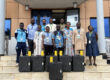

On, March 25, 2026, CRID welcomed a high-level delegation from the National Malaria Control Programme (NMCP), led by its Permanent Secretary, Dr. Zeh Meka. The meeting aimed to strategise the deployment of the bCUBE molecular platform as part of the project’s second phase.

Family picture
The work session began with a presentation by Dr. Armel Tedjou, Project Coordinator. After a recall of the project’s aim and the achievements made in Phase 1, he provided an overview of the Phase 2. He emphasized the transformative potential of the bCUBE platform, which can generate results within one to two days, compared to conventional methods that typically require six to twenty-four months. The platform integrates specialised internal software designed for automated data interpretation, ensuring both reliability and a reduction in human bias. In addition, it is coupled with VectorCam, a rapid, customizable, artificial intelligence (AI)-based, and cost-effective tool for the morphological identification of malaria vectors. Together, these technologies offer a powerful combination to accelerate malaria surveillance and support elimination efforts in Cameroon. During the pilot phase, the technology will be introduced in six priority health districts across five regions of Cameroon, with the goal of expanding nationwide after initial evaluation.
Strengthening Partnerships for Field Deployment
Discussions between CRID and NMCP focused on establishing a practical roadmap for deploying the technology in the selected pilot districts. Implementation will be coordinated by regional staff from the Ministry of Health and co-supervised by the NMCP Permanent Secretary, Dr. Zeh Meka, and Professor Charles Wondji, CRID Executive Director and co-Principal Investigator of the project. This collaboration represents a significant step toward decentralised, real-time malaria surveillance, enabling faster data-driven decision-making and more responsive vector control policies. The NMCP delegation present included: Dr. Fosso Jean, Deputy Permanent Secretary; Dr. Medou Hortense, Head of Training, Research and Epidemiological Surveillance Section; and Dr. Bomba Dominique, Head of Prevention Section.
Funded by the Gates Foundation, the bCUBE project is implemented in Cameroon in collaboration with Johns Hopkins University and Hyris. Its overall goal is to develop and evaluate a field-deployable, polymerase chain reaction (pcr)-based insecticide resistance surveillance system in Cameroon. This insecticide resistance surveillance system involves field-deployable preparation of mosquito deoxyribonucleic acid (DNA) samples and a pcr-based insecticide marker diagnostic assay that can be performed in a cost-effective and user-friendly, portable bCUBE pcr machine linked to automatic data interpretation integrated with a centralised cloud database.
The introduction of the bCUBE platform marks a turning point in Cameroon’s malaria control strategy. By moving from reactive approaches to proactive, data-driven interventions, the country will be better equipped to anticipate and respond to malaria transmission dynamics.