
This launch was the culmination of three interconnected activities: a capacity-building workshop, internal consultations, and a stakeholder engagement session; which together laid the foundation for a vibrant culture of knowledge exchange at CRID.
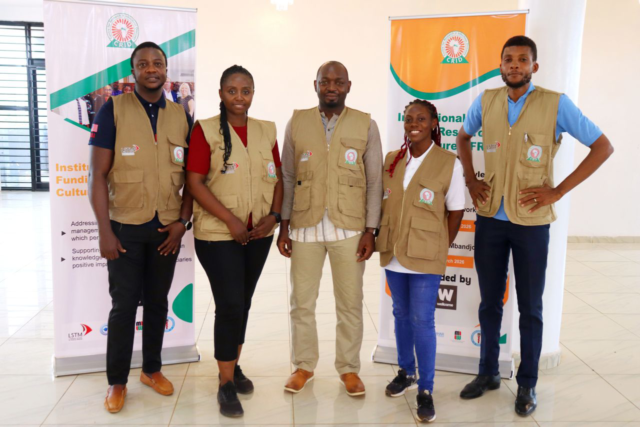
CRID Knowledge Exchange Team
Creating a Knowledge Exchange (KE) unit at CRID was part of the Institutional Funding for Research Culture (IFRC) Programme, funded by the Wellcome Trust and led by the Liverpool School of Tropical Medicine (LSTM). The journey began with a capacity-building workshop held from 9–10 March 2026 in Yaoundé, Cameroon. This training session gathered 20 participants, including KE Unit members, senior researchers, and project managers. Over the course of the sessions, participants developed a shared understanding of knowledge exchange concepts and terminology, explored its essential role throughout the research cycle, and discussed equitable strategies for engaging stakeholders. The workshop was facilitated by Chloe Brooks, Knowledge Exchange Specialist and Post-Doctoral Researcher at LSTM, based at the Malawi Liverpool Wellcome Programme.
Internal Consultation Sessions
Following the workshop, CRID organized internal consultations from 11th –13th March 2026 for its researchers. These sessions focused on identifying key research outputs from ongoing projects that were ready to be shared more widely. They also defined how the newly established KE Unit would actively support researchers in translating findings into practice. This step ensured that CRID’s scientific outputs would not only remain rigorous but also be positioned for uptake by policymakers, practitioners, and communities.
Stakeholder Engagement Meeting
The launch culminated in a stakeholder engagement session on the 24th March 2026 in Mbandjock, Centre region, one of CRID’s project implementation sites. The meeting brought together health authorities, traditional and religious leaders, local associations, community health workers, and volunteers. The session provided a platform to share research findings, promote dialogue between researchers and communities, and gather feedback to guide malaria control interventions. Presentations highlighted the persistence of insecticide-resistant malaria vectors, the need for innovative tools such as spatial emanators, and the importance of community perceptions in shaping effective interventions. Interactive activities, including mosquito identification exercises and creative communication through comics, helped demystify malaria and encouraged active participation. The discussions generated practical recommendations, from reinforcing mosquito net use to clarifying stakeholder roles in project implementation.
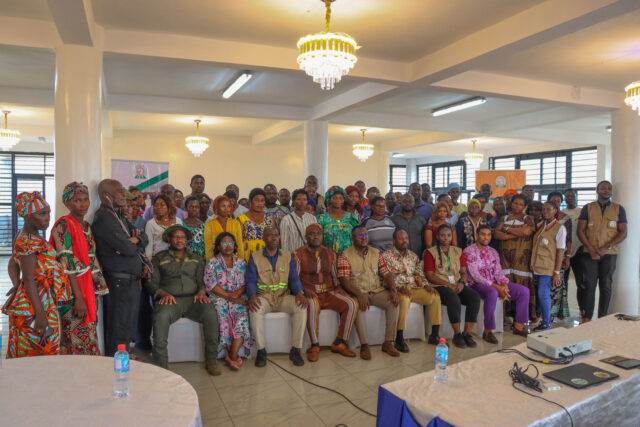
Family picture
The Knowledge Exchange Team
CRID’s KE Unit is made up of a multidisciplinary team committed to bridging science, policy, and community impact. Dr. Jessy Goupeyou, Lead, shapes the strategic vision and advances advocacy. Edith Kowa, as KE Officer, ensures communication and timely delivery of objectives. Dum-Buo Nnamdi, social scientist, facilitates community engagement and captures perceptions to inform impact. Dr Billy Tene, an entomology specialist, translates scientific outputs into accessible messages for communities. William Tadum Tadum, as Communications Manager, leads visual storytelling and creative outreach.
Together, the workshop, consultations, and stakeholder engagement represent a holistic launch of CRID’s Knowledge Exchange Unit. This milestone underscores CRID’s commitment to democratizing science, strengthening partnerships, and ensuring that research translates into tangible benefits for communities.