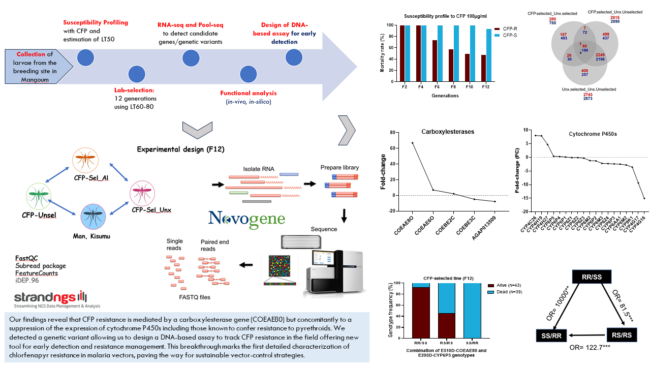
Publication: A COEAE80 esterase variant and P450-suppression drive chlorfenapyr resistance in malaria vectors

This study, led by Dr Magellan Tchouakui, a Wellcome Trust fellow at the Centre for Research in Infectious Diseases (CRID), investigates how mosquitoes transmitting malaria adapt to “chlorfenapyr”, a novel insecticide used in new generation bed nets. The team identified a gene called COEAE80 that helps mosquitoes survive chlorfenapyr, especially when detoxification gene families like…
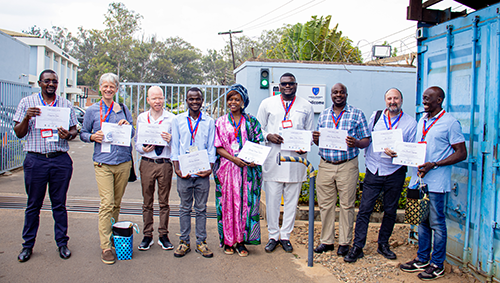
Collaboration : CRID Deepens Collaboration through Strategic CoP Engagements in Malawi

The Centre for Research in Infectious Diseases (CRID) recently strengthened its international partnerships by participating in the IT, Knowledge Exchange and Data Management Communities of Practice (CoP) meetings held in Blantyre, Malawi. These strategic engagements were part of the International Funding for Research Culture (IFRC) project, funded to the Liverpool School of Tropical Medicine (LSTM)…

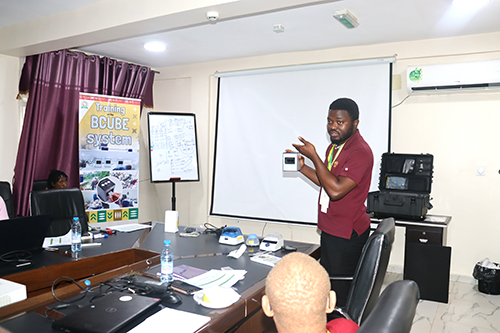
Capacity-building : CRID Researchers Complete Intensive Training on bCUBE System for Malaria Surveillance

From October 30 to November 4, 2025, the Centre for Research in Infectious Diseases (CRID) hosted an intensive internal training session on the bCUBE system–a portable, field-adapted device designed for real-time malaria data collection. Fifteen researchers participated in a bCUBE system training as part of phase 2 of the bCUBE project, funded by the Gates…