Graphical abstract

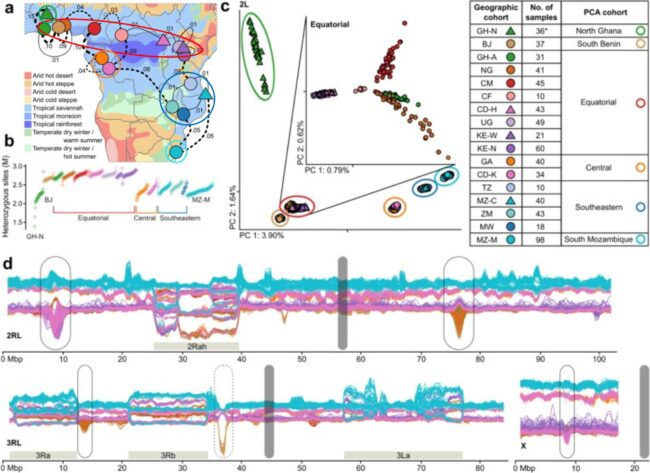
PUBLICATION: Evidence of microbiome contribution to the escalation of pyrethroid resistance in the major malaria vectors Anopheles gambiae s.s. and Anopheles funestus s.s, by Fleuriane Djondji & al.

Anopheles mosquitoes are becoming increasingly resistant to commonly used insecticides, particularly pyrethroids, the primary chemicals in bed nets across Africa. Beyond genetic mutations, which are known to play a key role in this enhanced resistance, researchers are now investigating another potential contributor: the mosquito’s microbiome. Mosquito microbiome refers to all the microorganisms (like bacteria, fungi,…

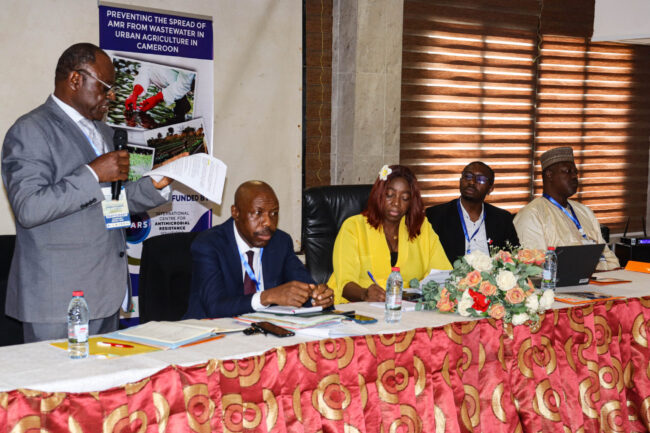
Dr. Binyang receiving his academic regalia from Prof. Wondji

Academic achievement : Achille Binyang defends his PhD thesis

On Thursday, July 3, 2025, Achille Jérome Binyang, former PhD student at CRID successfully defended his doctoral thesis at the Faculty of Science of the University of Yaoundé I. Achille Binyang’s research focused on how mosquitoes that carry malaria parasites are becoming resistant to insecticides, and how mechanisms associated to this resistance might affect the…

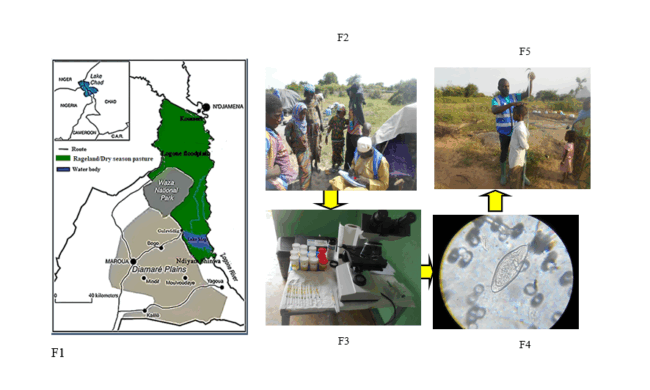
PUBLICATION: Optimizing MDA and antimalarial treatment in the presence of drug resistance for effective malaria control, by Manuela Nimpa & al.

Drug resistance threatens global malaria eradication efforts, necessitating innovative control strategies. This study examines how Mass Drug Administration (MDA) combined with antimalarial treatment can minimize resistance and improve malaria control. We developed a compartmental mathematical model to evaluate how resistance mutations affect transmission dynamics. The model tracks both treated and untreated populations among infected and…