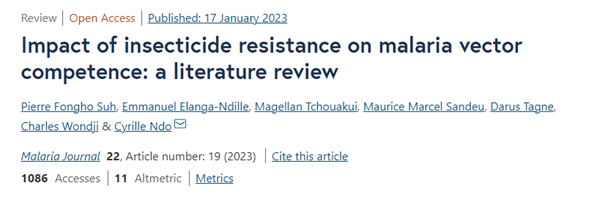
PUBLICATION: Impact of insecticide resistance on malaria vector competence: a literature review by Pierre Fongho Suh & al

  It is well established that the Anopheles mosquito’s, transmitting malaria are rapidly becoming resistant to insecticides in most endemic countries. With increasing proportions of insecticide resistant Anopheles vectors on the field, it is predicted that the successes obtained over the past decade in reducing vector’s abundances through the use of  insecticide-based control tools will…
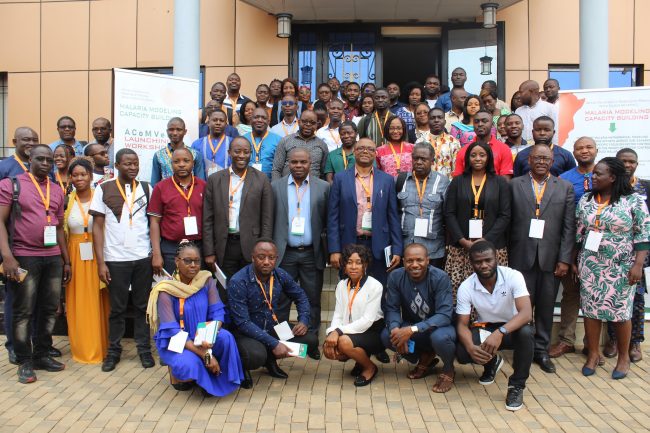
Capacity Building: ACoMVeC officially launched

The African Consortium in Modelling for Effective Vector Control (ACoMVeC), launching ceremony and first workshop took place on Monday, February 13th, 2023 at the Centre for Research in Infectious Diseases (CRID), Yaoundé, Cameroon. The workshop was aimed at strengthening the capacity of stakeholders in mathematical modelling for effective vector control. ACoMVeC is funded by the…

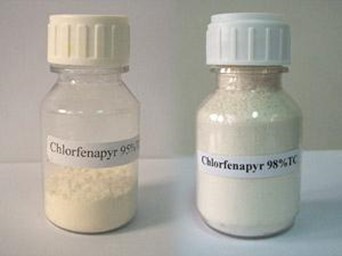
PUBLICATION: Detection of a reduced susceptibility to chlorfenapyr in the malaria vector Anopheles gambiae contrasts with full susceptibility in Anopheles funestus across Africa By Magellan Tchouakui & al

Recent reductions in malaria transmission in Africa are predominantly due to massive use of bednets impregnated with an insecticide chemical called ‘’pyrethroid’’. unfortunately, resistance to this product is threatening the efficacy of long-lasting insecticidal nets (LLINs). To mitigate this risk, novel insecticides such as chlorfenapyr are recommended by WHO to kill these malaria-transmitting mosquitoes. In…