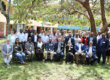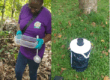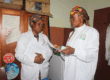

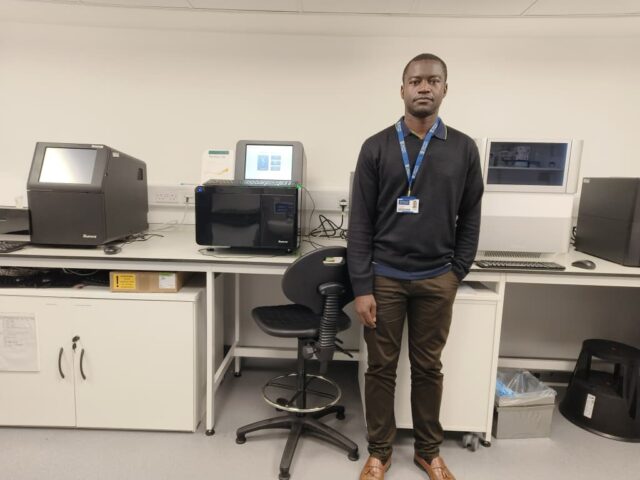
Dr Fredy Simo during his capacity training in metagenomics at the Genomics Unit, Centre for Virus Research
This fellowship project, awarded to Dr. Frédy Brice Nemg Simo, post-doctoral researcher at CRID, addresses the critical public health challenge of non-malarial and non-typhoid Acute Febrile Illness (AFI) in Cameroon. AFI is simply a sudden fever whose cause is not malaria or typhoid, often remaining unexplained because of limited diagnostic capacity. Cases of AFI have historically been attributed to malaria and typhoid, but improved control measures have reduced malaria incidence, revealing the growing importance of other viral causes. Limited diagnostic capacity has hindered understanding, prevention, and management of these infections. Hosted by CRID in Cameroon, the fellowship funded by the Africa Research Excellence Fund (AREF) began on 1st October 2024 and ended in December 2025.
Core Aim
The primary aim of this fellowship is to apply advanced genomic and computational approaches to uncover the diversity of viral pathogens responsible for acute febrile illness (AFI) in Cameroon. Metagenomics, an approach that analyzes genetic material recovered directly from clinical samples, will be combined with bioinformatics, the use of computational tools to process and interpret complex biological data. By examining malaria- and typhus-negative samples, the project seeks to improve diagnosis, management, and surveillance of AFI, thereby contributing to community well-being and strengthening early warning systems for emerging infections.
Dr. Simo has extracted total ribonucleic acid (RNA) from AFI samples and employed genomic sequencing, computational analysis, and statistical methods to characterize viral diversity. Through this placement, he has gained advanced expertise in genomic epidemiology and computational biology, enhancing CRID’s diagnostic capacity. In addition, he will identify scalable projects within CRID where these technologies can be applied, while organizing training sessions and fostering collaborations that will support larger funding applications.
Expected Outcomes
The project is expected to improve understanding of viral causes of AFI in Cameroon and contribute to the development of an early warning system for AFI surveillance. It will strengthen diagnostic and research capacity at CRID, enhance expertise in metagenomics, bioinformatics, and leadership, and increase collaboration with international partners. The fellowship is conducted in partnership with Professor Emma Thomson and Professor Ana Da Silva Filipe from the University of Glasgow, alongside metagenomics and bioinformatics experts at the Centre for Virus Research.