
A delegation from the Innovative Vector Control Consortium (IVCC) conducted a four‑day visit to CRID Cameroon, reinforcing ties and exploring new opportunities for collaboration in vector control research.
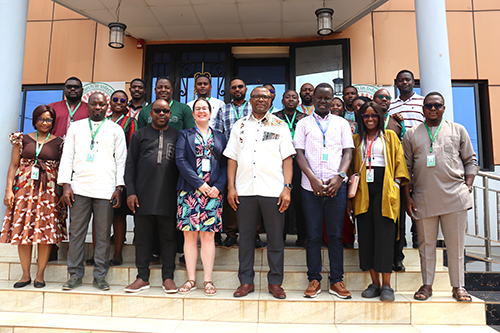
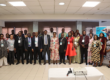
Family picture
On 03rd February 2026, the Executive Director, Prof. Charles Wondji, and CRID scientists welcomed Dr. Renaud Govoetchan, Field Entomologist, and Dr. Janneke Snetselaar, Senior Technical Manager at IVCC. The visit began with a presentation by Prof. Wondji on CRID’s research portfolio and ongoing projects, followed by a tour of our different facilities including laboratories and field stations; expressing admiration for the extensive research and state‑of‑the‑art equipment.
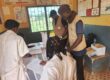
The following day, the IVCC team visited the Mangoum field station in West Cameroon. Mangoum, a rural village in the Noun department, characterized by extensive agriculture. Anopheles gambiae is the primary malaria vector in this villageand displaying high resistance level to almost all the public health insecticides, making it a critical site for evaluating new vector control interventions.
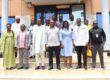
Back in Yaoundé, the IVCC delegation also met with Dr. Zeh Meka, Permanent Secretary of the National Malaria Control Programme (NMCP), and Dr. Tabue Raymond, Head of the Vector Control Unit. The meeting, facilitated by CRID, fostered discussions on strengthening innovation in vector control amidst global funding cuts. Dr. Snetselaar, technical lead for IVCC’s ITN portfolio, emphasized the importance of strong partnerships with national programmes and highlighted the need to introduce novel active ingredients in bed nets. Dr. Zeh Meka underscored the challenge of limited data for evidence‑based decision‑making, noting that Cameroon currently relies mainly on bed nets and must adopt new tools and strategies to advance toward malaria elimination.
The CRID team hosting the IVCC delegation included Dr Magellan Tchouakui, Research scientist; Dr. Yvan Fotso‑Toguem, Head of Testing Facility; Dr. Elysée Nchoutpouen, Supervisor of Insectary Activities; Williams Tchapga, Insectary Manager; and PhD students Riccardo Feudjio and Derrick Fofie.
This visit was a valuable opportunity to deepen collaboration, engage with CRID scientists, and explore innovative approaches to vector control that can contribute to malaria elimination efforts in Cameroon and beyond.