
On November 11–12, 2025, the CANVeCT consortium demonstrated its growing impact on global malaria prevention through two landmark events: a side meeting at the American Society of Tropical Medicine and Hygiene (ASTMH) annual conference and a finance kickoff workshop in the United Kingdom.
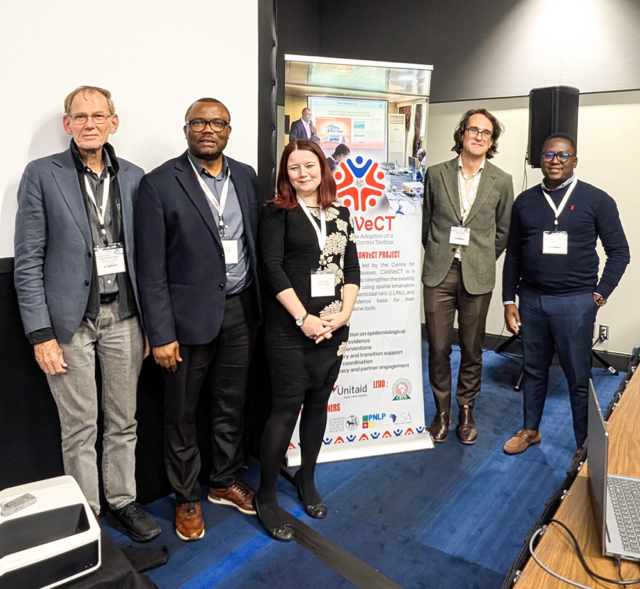
CANVeCT Consortium team members
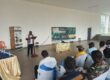
The CANVeCT side meeting at ASTMH25 brought together global stakeholders and researchers to elevate the visibility of spatial emanators and foster cross-disciplinary collaboration. The session generated strategic input for scaling up spatial emanator interventions, with feedback now informing the design and implementation of Catalyzing the Adoption of a Novel Vector Control Toolbox (CANVeCT) activities in Cameroon.
The meeting opened with remarksfrom Dale Halliday,Unitaid representative, who underscored the importance of innovation in malaria prevention. Prof. Charles Wondji, Principal Investigator, outlined the consortium’s aims, objectives, and the various outputs. Prof. Immo Kleindschmidt presented on randomized controlled trial design and its anticipated epidemiological outcomes, while Dr. Magellan Tchouakui, Co-PI, highlighted entomology component underpinning the project. In a video contribution, Dum-Buo Nnamdi shared insights into social science interventions, ensuring that community perspectives remain central to CANVeCT’s work.
Additional contributions included an online presentation by Dr. Ellie Sherrard-Smith, who outlined the modelling work package and the critical data it will generate, and a talk by Dr. Rosemary Lees emphasizing the role of global advocacy in catalyzing adoption of Spatial Emanators. A dedicated session on market access presented by Dr Tara explored strategies to ensure affordability and scalability of spatial emanators in endemic countries. Stakeholders from World Health Organization (WHO), Innovative Vector Control Consortium (IVCC), the Gates Foundation, and Vestergaard Sarl actively engaged in discussions, reinforcing the broad coalition committed to advancing malaria prevention. The meeting reaffirmed CANVeCT’s mission to advance spatial emanators as a scalable, community-centered solution to protect vulnerable populations from malaria. By building robust evidence, forging cross-sector partnerships, and developing effective pricing models, the consortium is committed to ensuring spatial emanators are accessible, affordable, and impactful.
Strengthening Financial Stewardship in the UK
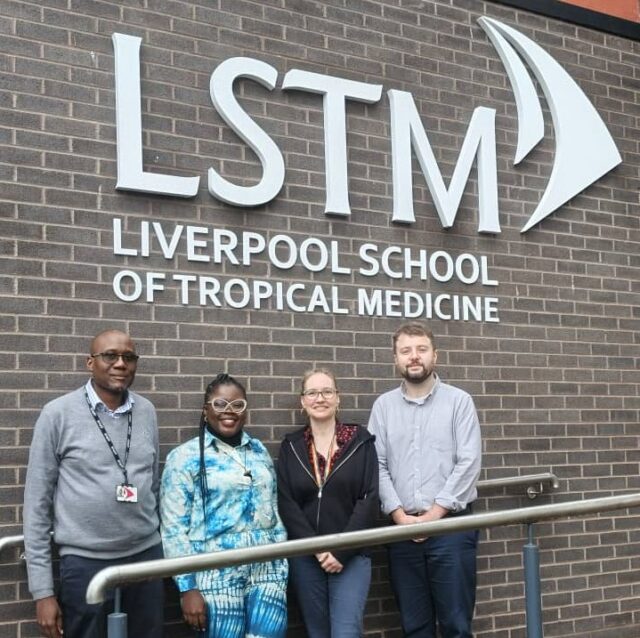
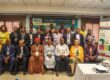
Family picture
While scientific discussions unfolded in Toronto, financial governance took center stage in Liverpool. From November 11–12, 2025, Falenne Yinike Kwalar, Finance Head at CRID, convened the CANVeCT Finance Kickoff Workshop at LSTM. As the lead facilitator, Falenne guided partners through Unitaid’s financial guidelines, management expectations, reporting deadlines, templates, and audit procedures. She emphasized strict compliance, timely reporting, and proactive grant management, reinforcing CRID’s commitment to excellence in financial stewardship. Beyond technical presentations, the workshop fostered valuable connections with finance focal points from LSTM and LSHTM, strengthening CRID’s international footprint and paving the way for greater impact. Reflecting on the event, Falenne noted: “This workshop clarified the expectations of the finance team and opened new doors for CRID’s research by connecting us with global innovators.”
Looking Ahead
Together, the ASTMH25 side meeting and the UK finance workshop showcased CANVeCT’s holistic approach: advancing cutting-edge science while ensuring robust financial governance. By uniting researchers, advocates, and financial leaders, the consortium is charting a path toward scalable solutions that protect communities and accelerate progress against malaria worldwide.
Funded by Unitaid, the CANVeCT project is implemented by the Centre for Research in Infectious Diseases (CRID) in collaboration with the Liverpool School of Tropical Medicine (LSTM) and the London School of Hygiene & Tropical Medicine (LSHTM).