
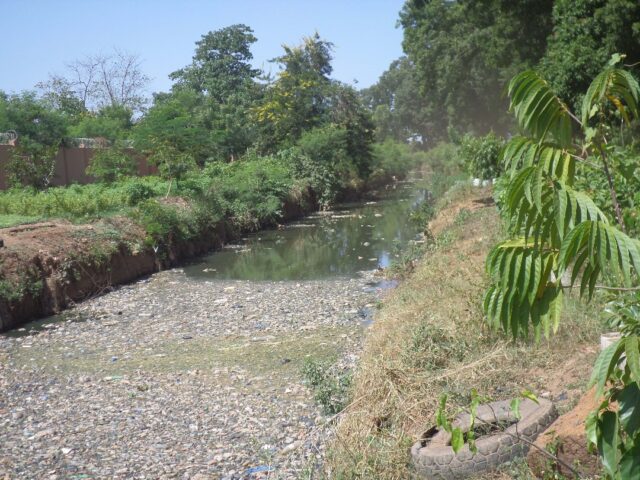
The primary goal is to interrupt the transmission of AMR and pathogens from wastewater used for irrigation to households
This research project addresses the critical public health challenge posed by the transmission and spread of Antimicrobial Resistance (AMR) via wastewater used for irrigation in urban agriculture. Cameroon is a relevant case study because urban agriculture is a source of employment and food supply, particularly in Yaoundé, and wastewater remains untreated. Given the shared challenges faced by most low- and middle-income countries, this project serves as an especially relevant case study. Cameroon serves as a prime example. By targeting AMR at its source, the project aims to protect public health, sustain agricultural productivity, and promote cost-effective, sustainable practices.
Core Aim
The primary goal is to interrupt the transmission of AMR and pathogens from wastewater used for irrigation to households. This will be achieved by collaboratively developing, testing, and advocating for effective, sustainable, and yield-preserving mitigation strategies. Furthermore, interventions will enable the project to quantify the rate of AMR transmission through this pathway, a rarely studied aspect. Through stakeholder engagement and intervention research, the project will reduce AMR in urban agriculture, initially in Yaoundé and subsequently globally, by influencing policy changes in collaboration with the Ministries of Agriculture and Public Health.
Specific objectives
Specific objectives include quantifying baseline AMR levels; tracking AMR transmission using genomic epidemiology; developing and evaluating mitigation strategies; and advocating for supportive policies. The methodology involves a multi-phase approach. 1-Urban agriculture sites in Yaoundé will be studied. 2-Baseline AMR levels will be assessed through a cross-sectional study, including focus groups, interviews, and participatory mapping. 3-Genomic epidemiology will be used to track AMR transmission through a longitudinal study involving extensive sampling and analysis. 4-Mitigation strategies, including farm-level interventions and market-level practices, will be tested and evaluated. Finally, 5-the project will disseminate findings, advocate for policy changes, and build capacity for sustainable implementation.
Expected outcomes
Projected outcomes include reduced AMR transmission, identification of effective mitigation strategies, increased public awareness, policy adoption, and strengthened collaborations between scientists, farmers and officials. This initiative funded by the International Centre for Antimicrobial Resistance Solutions (ICARS) will to run from April 2025 to March 2029. The team working on the project includes PI: Prof Blaise Bougnom; Co-PIs: Prof Henri Rodrigue Njengoue Ngamaleu; Prof Hortense Gonsu Kamga, and International Subject Matter Expert (SME): Prof Jan-Ulrich Kreft, University of Birmingham in United Kingdom (UK).