
CALL FOR APPLICATIONS PhD Position in the Social Science of Vector-Borne Diseases

Position: PhD Position in the Social Science of Vector-Borne DiseasesLocation: CRID, Yaoundé, Cameroon (with fieldwork in Cameroon and Kenya). Role Summary Integrated Multi-vector-borne Diseases Platform to Assess Global Change Impacts on Transmission Using Innovative Systems Modeling, Novel Monitoring Tools, and Transmission-blocking Microorganisms (IMPACTING). IMPACTING is an EU-funded, multi-country program led by icipe (Nairobi, Kenya) with…
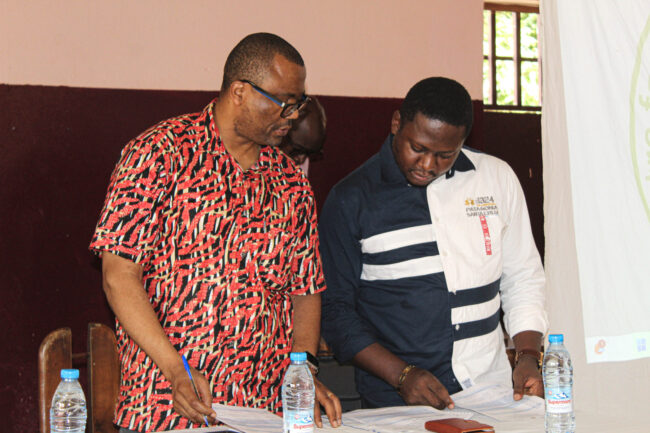
Prof Charles Wondji and Dr Magellan Tchouakui

CANVeCT : Striving for an Evolution of the WHO Conditional Recommendation of Spatial Repellents

Funded by Unitaid to an amount of US$ 18 million and led by Prof Charles Wondji, this project aims to generate robust evidence to support the adoption of spatial repellents as a novel tool to reduce malaria burden in Africa. The World Health Organization (WHO) recently issued a conditional recommendation for using spatial repellents alongside insecticide-treated…

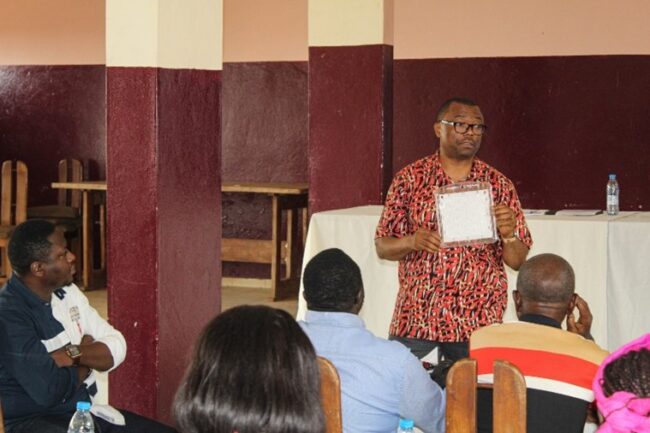
Prof Charles Wondji presenting a spatial repellent during a stakeholder engagement meeting

CRID awarded US$18 million grant for Catalyzing the Adoption of a Novel Vector Control Tool against malaria

Prof Charles Wondji, CRID’s Executive Director and Head of the LSTM Research Unit at CRID, will lead a team of experts to generate robust evidence to support the adoption of spatial repellents as a novel tool to reduce malaria burden in Africa. Malaria prevention relies heavily on insecticide-based interventions, notably insecticide-treated nets. However, efforts to…