
Funded by Unitaid to an amount of US$ 18 million and led by Prof Charles Wondji, this project aims to generate robust evidence to support the adoption of spatial repellents as a novel tool to reduce malaria burden in Africa.
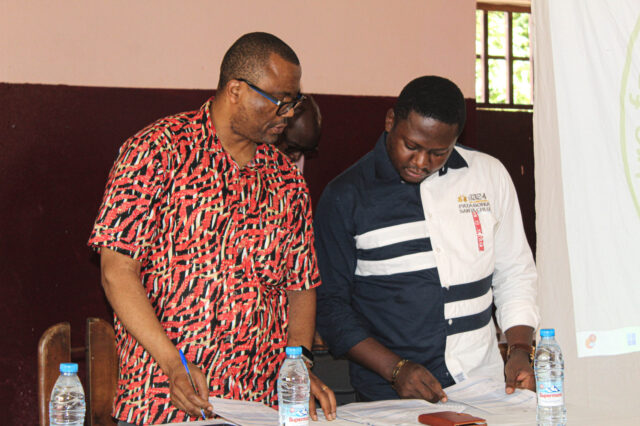
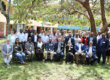
Prof Charles Wondji (CANVeCT lead) and Dr Magellan Tchouakui (CANVeCT co-lead) during a community engagement meeting at the study field site in Cameroon
The World Health Organization (WHO) recently issued a conditional recommendation for using spatial repellents alongside insecticide-treated nets, representing a major advance in malaria prevention. Spatial repellents are the first new class of vector control intervention in decades, a significant milestone made possible through research funded by Unitaid.
Spatial repellents are simple, user-friendly devices designed for indoor use. By gradually releasing active ingredients into the air, these devices either kill or deter mosquitoes, providing effective protection for up to a year. Unlike interventions requiring direct contact, such as bed nets or indoor spraying, spatial repellents safeguard people in settings where other tools may be impractical or where mosquitoes are active outside traditional sleeping hours.
The Importance of the CANVeCT Trial
Unitaid is investing US$18.1 million in the catalytic five-year project entitled “Catalyzing the Adoption of a Novel Vector Control Toolbox (CANVeCT)”. Led by the Centre for Research in Infectious Diseases (CRID) in Cameroon and implemented in partnership with the Liverpool School of Tropical Medicine and the London School of Hygiene & Tropical Medicine, CANVeCT will generate robust evidence on the effectiveness of spatial repellents, both as stand-alone tools and in humanitarian contexts.
Professor Charles Wondji, Executive Director of CRID and principal investigator for CANVeCT, stated: “Spatial repellents have the potential to accelerate malaria elimination efforts. We are glad to have been awarded this project by Unitaid and look forward to generating the evidence needed for a full recommendation by WHO and to catalyze its rapid adoption for malaria control.”
Dr. Magellan Tchouakui, research scientist at CRID and co-lead of CANVeCT,added : “We are very excited about this Unitaid-funded project at CRID. We aim to generate strong evidence on spatial repellents as a novel tool to reduce malaria in Africa, whether used alongside insecticide-treated nets or alone. This work could transform malaria control and support updated WHO recommendations, ultimately helping to save many lives in Cameroon and across the continent.”
Historic Local Leadership in Malaria Control

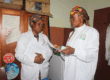
Prof Wondji, CANVeCT Lead, presenting the Guardian Spatial repellent to the NMCP manager in Cameroon as part of the stakeholder engagement
CANVeCT is particularly significant as it marks the first Unitaid-funded malaria project led by a south-based partner in a malaria-endemic country, emphasizing local ownership and leadership in a region where over 90% of global malaria deaths occur. Through increased support for south-based institutions, Unitaid aims to foster equity, sustainability, and greater relevance for the communities most affected.
Unitaid is a global health organization that saves lives by making new health products available and affordable for people in low- and middle-income countries. Unitaid works with partners to identify innovative treatments, tests and tools, help tackle the market barriers that are holding them back and get them to the people who need them most – fast. Unitaid is hosted by the World Health Organization.
As spatial repellents approach full endorsement, Unitaid’s continued investments in research and implementation are set to accelerate the expansion of malaria vector control options. The upcoming CANVeCT trial represents a milestone, one that could turn conditional recommendations into definitive policy, enabling broader and more equitable access to innovative tools for at-risk communities worldwide.