
The species, Myxobolus wondjii sp. nov., was identified by a research team led by Prof. Guy Benoît Lekeufack-Folefack from the University of Yaoundé I. The findings are published in the European Journal of Taxonomy.
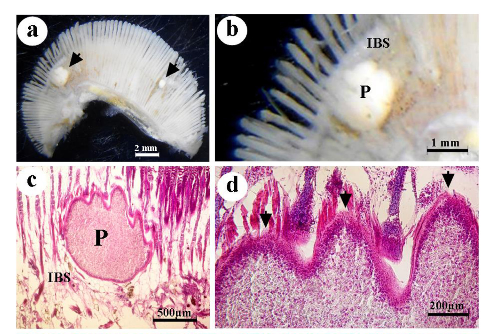
Photomicrographs of gills of Labeo batesit Boulenger, 1911 showing plasmodia of Myxobolus wondjti sp. nov. A. Fresh preparation showing whitish plasmodia in the gills (arrowheads), B. High-magnification fresh preparation showing a plasmodium (P) located on the interbranchial septum (IBS). C. Histological section of gills stained with H&E showing the general morphology of the plasmodium (P) in the interbranchial septum (IBS). D. Histological section stained with H&E showing cyst protrusions (arrowheads)
A newly discovered parasite species has been named in honour of Prof. Charles Wondji, Executive Director of the Centre for Research in Infectious Diseases (CRID). This naming serves as a tribute to his technical support for the study and his broader contributions to scientific research and leadership in Africa. The achievement was made possible through the expertise of CRID researchers: Dr. Billy Tene Fossog, a molecular genetics specialist at CRID, played a key role in identifying and analyzing the parasite. In addition, Mrs. Murielle Wondji, CRID’s Lab Manager, contributed her expertise in genomics and molecular biology, overseeing the laboratory processes that led to the discovery.
About the Discovery
The newly discovered parasite, named Myxobolus wondjii, was found in the gills of a freshwater fish called Labeo batesii, which lives in the Makombè River near Nkondjock, Cameroon. Researchers noticed small, whitish lumps in the fish’s gills (clusters of the parasite). Under the microscope, they found that the parasite produces tiny, oval-shaped spores with two internal structures that help it infect the fish.To better understand the parasite, scientists analyzed its genetic material. This confirmed that Myxobolus wondjii is closely related to another parasite species that also infects the same fish in the region. The study is published in the European Journal of Taxonomy
This discovery helps scientists better understand the diversity of parasites in African freshwater ecosystems, and could be important for fish health and conservation efforts.
A Symbol of Scientific Leadership
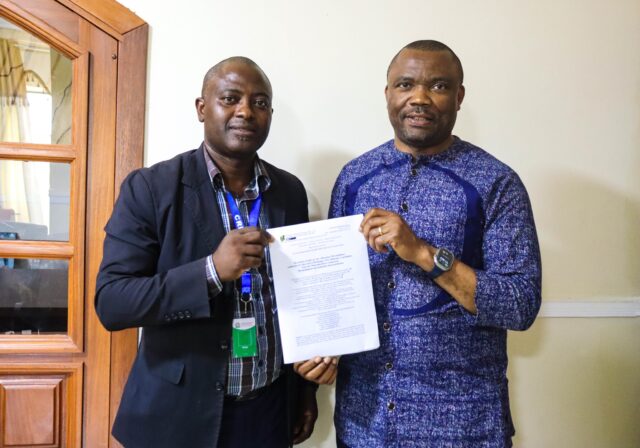
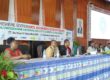
Prof. Guy Benoît Lekeufack-Folefack and Prof. Charles Wondji
Naming a species after Prof. Wondji is more than symbolic, it reflects his visionary leadership and commitment to advancing health research. A renowned expert in infectious diseases such as malaria, Prof. Wondji’s work continues to drive impactful solutions for public health across Africa and globally.