

As mosquitoes become resistant to insecticides and the malaria parasite develops resistance to drugs, malaria remains difficult to control. With no fully effective vaccine, innovative and environmentally friendly strategies are urgently needed. One promising approach is to study the natural bacteria (microbiota) living inside mosquitoes and their potential role in malaria transmission.
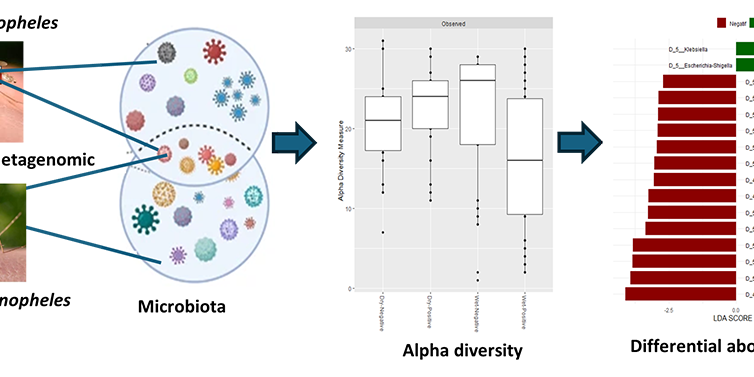
In this study, Dr. Marcel Sandeu and his team analyzed the microbiota of Anopheles gambiae mosquitoes collected in Bankeng, southern Cameroon, during both wet and dry seasons. They compared mosquitoes infected with the malaria parasite (Plasmodium falciparum) to those that were not.
The results showed that most bacteria were shared between infected and uninfected mosquitoes, but their proportions differed. Mosquitoes without malaria parasites generally had a greater diversity of bacteria during the rainy season, while infected mosquitoes showed higher bacterial diversity during the dry season. Some bacterial groups were more common in uninfected mosquitoes, suggesting they may help reduce the risk of malaria infection. Although this study cannot prove cause and effect, it provides useful information that could support the development of new, environmentally friendly ways to control malaria by targeting mosquito bacteria.
To learn more about the study and its implications, follow this link: https://journals.asm.org/doi/full/10.1128/msphere.00490-25