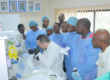

From September 23–25, 2025, the CANVeCT Scientific Core Team convened its inaugural consortium workshop in Mbankomo, Cameroon. This milestone event brought together a multidisciplinary group of experts to refine the implementation strategy for the project’s success
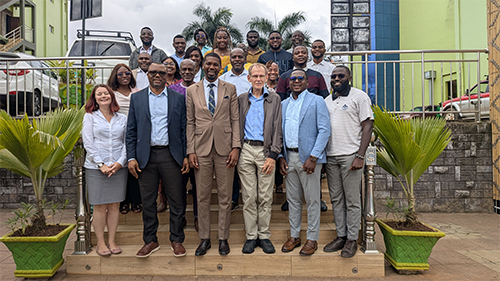
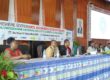
Family picture
Participants included epidemiologists, entomologists, social scientists, civil society representatives, and global research partners. The meeting was honoured by the presence of Dr. Zeh Meka, Permanent Secretary of Cameroon’s National Malaria Control Programme (NMCP), who reaffirmed strong national support for the initiative. “This project is a great opportunity for Cameroon to adopt new tools for vector control, especially as many people do not always use bed nets as intended. We are eager to see the evidence generated by the CANVeCT team and reiterate our full support for its successful implementation”, he said.
Funded by Unitaid, the Catalyzing the Adoption of a Novel Vector Control Toolbox (CANVeCT) project aims to strengthen the existing WHO recommendation for Spatial Repellents (SR) in combination with LLINs, and establish the evidence base for SRs as a standalone tool given current funding constraints which will make layering of tools more challenging for National Programmes. Spatial repellents are innovative tools that slowly release chemicals into the air. Led by Professor Charles Wondji, the Principal Investigator, CANVeCT is built on the premise that preventing mosquito entry, attraction, and feeding can significantly reduce malaria transmission. The project emphasizes early stakeholder engagement to ensure community uptake and acceptability.
Evidence Generation
At the heart of CANVeCT is a robust evidence-generation framework designed to evaluate the epidemiological and operational effectiveness of SRs. A Randomized Controlled Trial (RCT) will be conducted in the Central region of Cameroon, characterised by high malaria transmission and significant pyrethroid resistance. The trial, supervised by Professor Immo Kleinschmidt from the London School of Hygiene and Tropical Medicine, will assess the protective efficacy and cost-effectiveness of SRs when used alone and in combination with long-lasting insecticidal nets (LLINs).
The study design includes three trial arms: LLIN + placebo SR, LLIN + SR, and SR alone. The primary outcome will be the incidence of malaria among children aged 5–14 years, while the secondary outcome will focus on malaria prevalence. Data generated from the trial will be integrated into the Malaria Intervention Tool (MINT) to support decision-making by the NMCP in Cameroon and in other malaria endemic countries using mathematical modelling led by Dr. Ellie Sherrard-Smith from the Liverpool School of Tropical Medicine.
Complementing the epidemiological study is a comprehensive entomological surveillance plan to estimate impact of SRs on the entomological inoculation rate and other vector-related parameters. The durability of SRs will also be monitored, along with any development of resistance. The project will conduct durability evaluations to inform cost-of-goods analyses, helping to determine the most efficient and cost-effective formulations. Data generated from the trial will be used to support demand forecasting, ensuring that supply meets projected needs. CANVeCT will also explore sustainable pricing models to make SRs accessible to target populations, which is key to informing tradeoffs in a constrained funding environment.
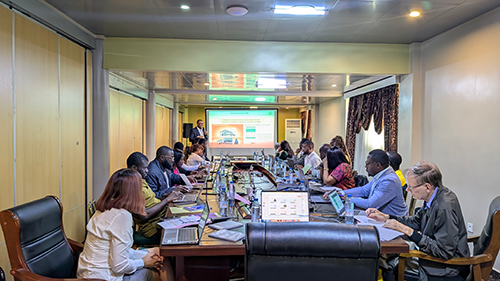
Professor Charles Wondji giving an overview of the CANVeCT project
Country-Level Coordination
CANVeCT places strong emphasis on in-country stakeholder engagement to facilitate operational uptake and generate demand. CRID will lead this effort in collaboration with Impact Santé Afrique (ISA), a civil society organization with expertise in health advocacy and community mobilization. Activities will include sensitization campaigns at both household and community levels to introduce SRs and address misconceptions.
The project will conduct in-depth interviews and focus group discussions to understand community perceptions, preferences, and barriers to adoption. A national taskforce comprising Civil Society Organizations (CSOs) will be established to advocate for SR adoption and scale-up. ISA will assist CRID in multi-stakeholder coordination, organizing consultation workshops at national, regional, and community levels. The team will develop and disseminate user-friendly communication materials and conduct high-level advocacy with key decision-makers. All staff involved in community engagement will be trained on safeguarding protocols to ensure ethical and respectful interactions.
Global Advocacy and Partner Coordination
To support global adoption and policy alignment, CANVeCT will engage with key stakeholders in the global malaria ecosystem. CANVeCT will contribute to the development and revision of WHO operational manuals on the use of SRs, ensuring that findings are translated into normative guidance. The project will organize workshops to align data needs with regulatory, cost-effectiveness, and implementation strategies, targeting donors and policy-makers. The MINT platform will be used to disseminate findings and support evidence-based decision-making in Cameroon and in other malaria endemic countries of West and Central Africa.
More than a research initiative CANVeCT is a collaborative movement to reduce the malaria burden in Africa. With strong partnerships, innovative tools, and community-driven strategies, the project is poised to deliver impactful results that will shape the future of vector control and contribute to global efforts to eliminate malaria.