
CRID was proud to partner in the first edition of the National Malaria Control Programme (NMCP) Scientific Days, held at the Yaoundé Conference Center from December 15 to 17, 2025. This landmark event brought together policymakers, researchers, and health professionals to discuss strategies for moving from malaria control to elimination in Cameroon.
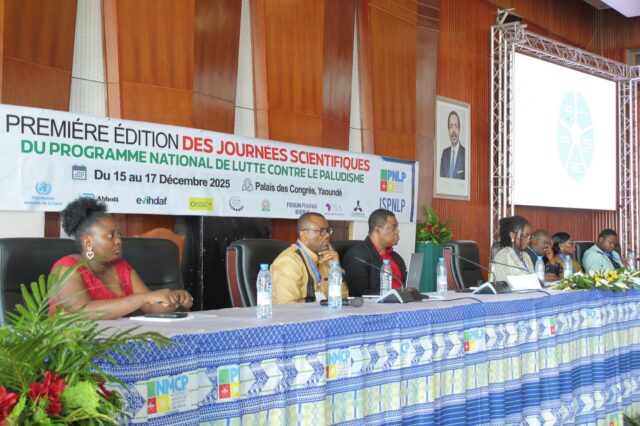
Panelists during CRID Symposium
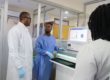
The opening ceremony, chaired by Dr. Manaouda Malachie, Minister of Public Health, emphasized the central role of research in achieving national malaria goals. Prof. Charles Wondji, CRID’s Executive Director, moderated the first plenary session on the epidemiological situation of malaria, where Dr. Zeh Meka, Permanent Secretary of the NMCP, called for innovation and efficiency in the fight against malaria, stressing the need to shift from control to eradication. During the stand visits, CRID showcased its innovative tools—including bCUBE, VectorCam, and Spatial Emanators—to parliamentarians, Ministry of Health representatives, students, researchers, and media professionals. These technologies attracted strong interest as promising advances in vector surveillance and control.
Researchers from CRID contributed significantly to the scientific sessions. Presentations addressed critical issues such as metabolic resistance in malaria vectors, the need for new vector control strategies, and enhanced entomological surveillance. Findings on malaria parasites prevalence and diagnostic performance underscored the importance of routine evaluation of rapid diagnostic tests to ensure accuracy in surveillance and treatment. Prof. Cyrille Ndo also delivered a talk presenting the Sterile Insect Technique (SIT) as a promising innovation for future field implementation.
CRID’s Scientific Symposium
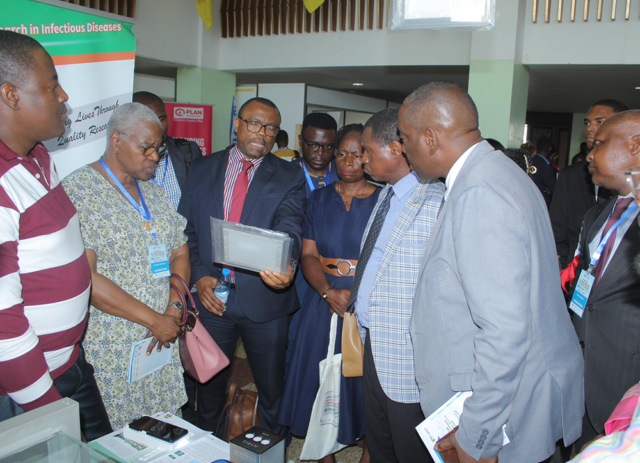
Parliamentarians visit CRID stand
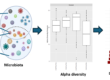
In addition of presentations during scientific sessions, CRID’s groundbreaking work was highlighted in a dedicated scientific Symposium, moderated by Dr. Goupeyou Jessy. During this session, Dr. Magellan Tchouakui presented findings on chlorfenapyr resistance mechanisms, while PhD student Djondji Fleuriane shared evidence of microbiome contributions to pyrethroid resistance in malaria vectors. Prof. Cyrille Ndo addressed diagnostic discordance in rapid tests, and Dr. Estelle Mewamba introduced the African Centre for Vector Genomics (AVecGen) project. Prof. Wondji concluded with the innovative CANVeCT project, underscoring its potential to generate evidence for spatial emanators as a novel vector control tool.
The closing ceremony, presided over by the Secretary General of the Ministry of Public Health, marked the successful conclusion of the NMCP Scientific Days. We congratulate the NMCP for this initiative, which brought together a broad spectrum of stakeholders engaged in the fight against malaria in Cameroon. CRID is proud to have contributed at every level of this important effort, advancing research and innovation in malaria control across the country.