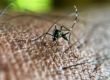

On the occasion of World Mosquito Day, August 20th, Dr. Magellan TCHOUAKUI, a researcher at the Centre for Research on Infectious Diseases (CRID), discusses the challenges of vector control in Cameroon. From insecticide resistance to innovations like spatial repellents and community awareness, he outlines strategies to combat malaria and other mosquito-borne diseases. This enlightening interview highlights a battle where science and collective mobilization make all the difference.

Can you introduce yourself to the readers of Groupe-Echos Santé?
I am Dr. Magellan TCHOUAKUI, a researcher at the Centre for Research on Infectious Diseases (CRID), where I also completed my PhD. I joined CRID at its inception in 2018. After completing my thesis in 2020, I undertook a postdoctoral fellowship as part of a project funded by the Bill and Melinda Gates Foundation, during which I studied the mechanisms of resistance to new insecticides recommended by the World Health Organization (WHO). Currently, I am the recipient of a five-year research grant from the Wellcome Trust, aimed at identifying the best strategies to manage insecticide resistance in malaria vectors. This is the core focus of my daily research activities. I lead a team of researchers at CRID, including PhD students, master’s students, and laboratory technicians. In summary, I am a CRID researcher whose work primarily focuses on managing insecticide resistance in malaria vectors.
Can you remind us of the origins of World Mosquito Day?
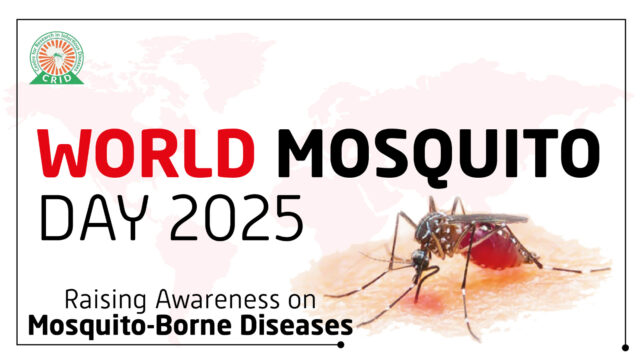
The discovery of the mosquito’s role in malaria transmission was a major milestone, as many people suffered from the disease without knowing its exact cause. In 1897, British physician Sir Ronald Ross proved that mosquitoes transmit the malaria parasite to humans. This discovery earned him the Nobel Prize in Medicine in 1902 and marked a significant scientific breakthrough. To commemorate this achievement, the date of his discovery, August 20th, was designated as World Mosquito Day. This day aims to raise public awareness and emphasize the importance of preventive measures to avoid bites and protect against mosquito-borne diseases.
What message would you like to share with communities?
For the Cameroonian public, mosquitoes are often seen as a mere nuisance. However, they pose a serious public health threat as vectors of several dangerous diseases. In addition to malaria, mosquitoes transmit illnesses such as yellow fever and the Zika virus. In Cameroon, malaria remains the deadliest disease transmitted by mosquitoes. It is responsible for the majority of illness and death, particularly among children under the age of five. Vigilance and collective mobilization are therefore essential to protect our families and communities. That’s why we must all actively engage in the fight against these insects.
In Cameroon, what are the main mosquito-borne diseases that concern CRID researchers the most?
As I mentioned earlier, malaria is our top priority because it remains the leading cause of death and illness among children under five. At CRID, we study its vector from every possible angle, and we’ll have the opportunity to discuss this in more detail. We also focus on arboviruses—a group of diseases transmitted by mosquitoes—such as dengue, chikungunya, Zika, and yellow fever. This is another major research area for our team. Finally, we work on other vector-borne diseases, including sleeping sickness, which is transmitted by the tsetse fly. Although many consider it eliminated, it remains a health issue in certain regions, particularly in the Campo area. We also study filarial diseases, including lymphatic filariasis. In summary, CRID primarily focuses on mosquito-borne diseases, with key research areas covering malaria, arboviruses, and other neglected tropical diseases.
What factors do you believe contribute to the proliferation of mosquitoes and the persistence of these diseases in Cameroon?Several factors contribute to the spread of mosquitoes and disease transmission. The lack of proper sanitation infrastructure is the primary factor. Poor hygiene and unsanitary conditions create ideal environments for mosquito breeding. Stagnant water in neglected drains, abandoned trash bins, and waste dumps serve as perfect larval habitats. Poor waste management is also a critical factor. The accumulation of garbage around homes encourages the reproduction of certain mosquito species, such as Aedes, the main vector of diseases like dengue and Zika. Lastly, climate change plays a significant role. Rising temperatures accelerate mosquito development cycles and extend the transmission period of diseases, allowing mosquitoes to invade new territories and bite more frequently, even outdoors.
 What are CRID’s daily activities in the fight against mosquitoes and in research?
CRID conducts in-depth research, particularly in molecular biology, to better understand malaria and its vector. Our work also focuses on developing innovative control methods, monitoring insecticide resistance, and raising community awareness. To support this, we have teams of sociologists working to improve communication with local populations. We work closely with various partners to design and implement control strategies tailored to the Cameroonian. context. Recently, we received US $18 million funding from Unitaid, a WHO agency, to evaluate the effectiveness of a new vector control tool in our environment. This device, called a Spatial Repellent, is a simple-to-use object that, once hung in a home, repels and kills mosquitoes for a full year without needing replacement. It’s a major innovation, as for the past 20 years, malaria control has relied primarily on mosquito nets. We believe this tool could revolutionize vector control strategies. We will keep you informed of the results of this study in the coming months and years.
It’s said that you raise mosquitoes. Can you explain the purpose of this practice?
To fight an enemy, you must first understand it. That’s why we raise mosquitoes in the laboratory at CRID. The goal is to study their behaviour in response to existing and developing control tools and to assess their resistance levels. This process is essential. For example, before testing a new tool like the Spatial Repellent, we must first ensure its effectiveness in the lab. This allows us to verify whether its action is consistent across different locations. We collect mosquitoes from Cameroon and several other African countries, raise them at CRID, and then test them against various insecticides and control tools. This enables us to make precise recommendations to control programs and the Ministry of Health, proposing the most effective strategies for each context. In short, mosquito rearing is crucial for understanding their behaviour toward control products and for making scientifically grounded recommendations.
How does CRID’s research contribute to improving vector control strategies in Cameroon?
Our main goal at CRID is to combine scientific expertise and innovation to better anticipate and respond to the challenges of vector control. To achieve this, we conduct rigorous studies and provide concrete recommendations. A notable example is our work on mosquito nets. In a study conducted and published by my team in 2023, we demonstrated that “dual-action” mosquito nets were the most effective in Cameroon, regardless of the population tested. Following our recommendations, these nets were distributed in certain regions of the country in 2022 and 2023. Today, they will be used in the upcoming national distribution campaign. This is how we directly contribute to solving public health problems. We also place great importance on capacity building. We train many students and young researchers in cutting-edge molecular biology technologies for more effective mosquito control. Currently, CRID is establishing a Centre of excellence in molecular biology to optimize this training. By studying the mosquito genome and the mutations responsible for resistance, we can develop the most effective control strategies.
Do you also work on mosquito resistance to insecticides or on new repellents?
Insecticide resistance is at the heart of our research. We study in depth the biological and molecular mechanisms that allow mosquitoes, especially malaria vectors, to survive conventional treatments. This phenomenon seriously undermines the effectiveness of vector control tools such as mosquito nets and insecticides. Understanding these mechanisms is crucial for developing new strategies and continuing to protect populations from mosquito-borne diseases. It is the main research focus at CRID.
 Fighting mosquitoes is everyone’s responsibility—not just nations or health authorities. What simple and effective action can each citizen take daily to protect themselves and their families?
For control tools to be effective, they must be used properly, and healthy habits must be adopted daily. First, at the individual level, everyone should use recommended protection tools correctly. For example, it is essential to always sleep under an insecticide-treated mosquito net to protect one’s family and children. Next, it’s important to act directly on the immediate environment. This means eliminating mosquito breeding grounds, such as stagnant water around homes. It’s equally important to protect your home’s openings, like windows, by covering them to prevent mosquitoes from entering. Personal protection is also necessary. Wearing long-sleeved clothing, especially in the evening, helps protect arms and legs from bites. Finally, it’s crucial not to act alone. Everyone should raise awareness among their family and neighbours to encourage these simple actions. Only through collective action can we reduce the impact of mosquito bites.
What are the main myths or misconceptions about mosquitoes and the diseases they transmit that you would like to correct?In our context, several misconceptions circulate, and it’s essential to correct them for better prevention. Some people believe mosquitoes only bite at night. This is a widespread belief, but it’s false. While malaria vectors like Anopheles are mainly active at night, many other species bite during the day. This includes mosquitoes that transmit arboviruses such as dengue, chikungunya, yellow fever, and Zika. So, it’s important to protect oneself both day and night. Others claim that malaria can be contracted by eating too many mangoes. However, malaria is only transmitted through the bite of an infected mosquito. Eating mangoes has absolutely no connection to the transmission of the disease, you can eat as many as you like without risking malaria. Another myth concerns filariasis, a parasitic disease transmitted by mosquito or fly bites. Some believe that consuming sugar causes the disease. In reality, sugar consumption is not a cause. However, if someone already has filariasis, eating a lot of sugar may worsen itching sensations, but it does not trigger the disease. By sharing this information, we can help the public better understand and adopt more effective prevention measures.
What role do communities and the media play in raising awareness and preventing these diseases?
Community awareness is a key pillar in the fight against disease. We saw this recently with the rollout of a new vaccine. If misinformation spreads or if media don’t fully play their role in explaining the nature of these tools, their use won’t be optimal. The same applies to mosquito nets. Due to certain cultural perceptions or false beliefs, many people, even in villages, have reservations and don’t use mosquito nets properly. That’s why it’s essential to strengthen community engagement and media involvement. The goal is to better inform, raise awareness, and dispel myths to promote prevention and collective mobilization. Ultimately, these interventions can only be effective if they are accepted and used by the population. If prevention tools are not adopted, the expected results will not be achieved.
Finally, what is your hope for the future of mosquito control in Cameroon and globally?
There are good reasons to be optimistic. In the past, the fight was more difficult, relying mainly on tools like pyrethroid-treated mosquito nets. However, technological advances offer new possibilities. The development of new insecticides is a long process, but it’s promising. Moreover, with the arrival of innovative tools like the Spatial Repellents, which CRID will be testing in the coming months, we have new weapons to accelerate the fight. Therefore, with collaboration among all stakeholders (researchers, communities, authorities, and partners), we hope to see vector-borne diseases disappear in Cameroon and across the continent.
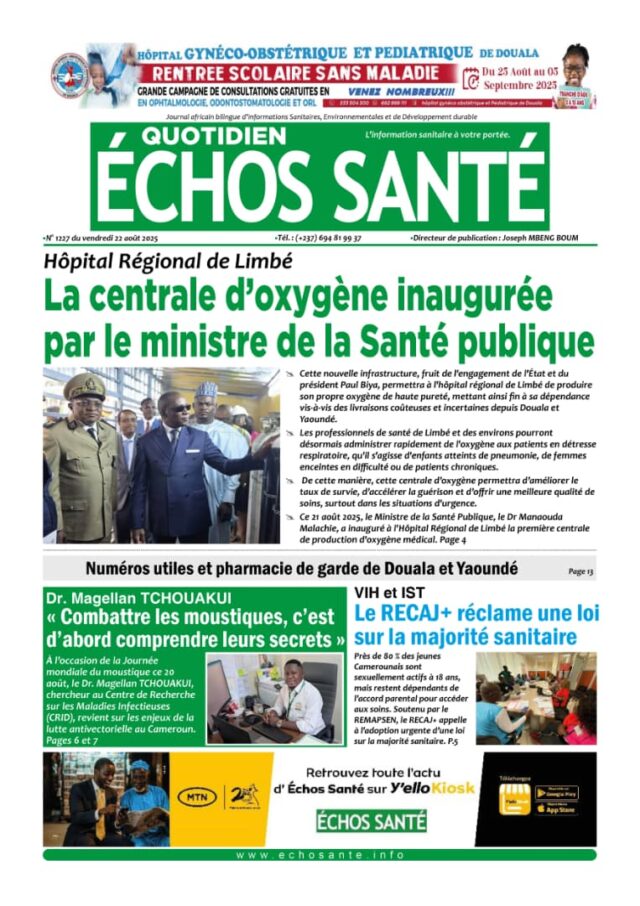
Interview by Elvis Serge N (Source: Echos Santé N°1227 of Friday 22nd August 2025)