
From December 1 to 5, 2025, the Centre for Research in Infectious Diseases (CRID) hosted the bCUBE Annual Meeting – Phase 2, a week dedicated to advancing field-deployable malaria molecular surveillance systems.
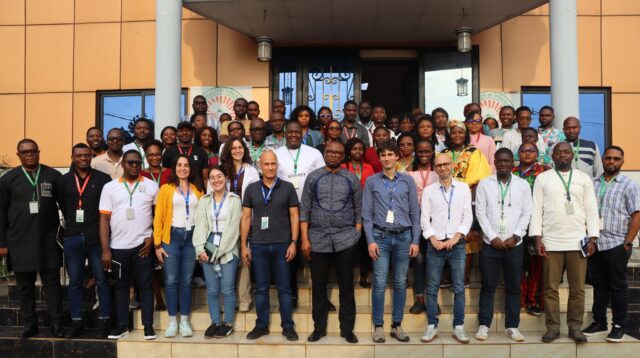 Partners from Johns Hopkins University and Hyris Ltd. joined CRID in Yaoundé for an intense program of scientific exchange, training, and fieldwork. The opening session set a collaborative tone, with Dr. Armel Tedjou, Project Coordinator, presenting the agenda and Prof. Charles Wondji, Principal Investigator, officially launching the meeting. Discussions focused on progress made during the first year of Phase 2, with updates on diagnostic assay development and highlights on the deployment of the surveillance system in real-world settings.
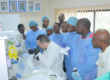
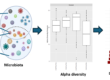
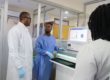
Over the week, participants engaged in immersive laboratory sessions covering multiplexing techniques, dry cartridge production, and the development of Standard Operating Procedures (SOPs). These sessions equipped attendees with both technical skills and operational know-how essential for successful implementation of the bCUBE system. A highlight was the scientific symposium delivered by Prof. Georges Dimopoulos of Johns Hopkins University, who shared ground-breaking insights on gene drive technologies and microbial biopesticides with CRID staff, inspiring lively discussions and opening new avenues for collaboration.
Stakeholder Engagement Meeting
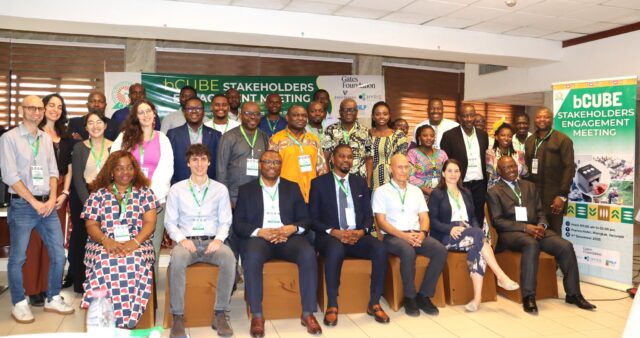
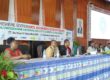
Family picture of bCUBE Stakeholder engagement meeting
On December 4, the bCUBE stakeholder engagement meeting was held at Franco Hotel in Yaoundé, bringing together researchers, scientists, lecturers, and representatives from leading institutions. Keynote speaker Dr. Albert Zeh Meka, Permanent Secretary of the National Malaria Control Programme (NMCP), joined a distinguished panel including Prof. Charles Wondji (CRID), Lorenzo Colombo (Hyris), Prof. Georges Dimopoulos (JHU), and Marina Rincon (JHU-VectorCam). Discussions highlighted the advantages of bCUBE technology, capable of delivering results within few hours after mosquito collection, with all the data centralised in the cloud. In addition, no cold-chain is needed, and there is no need for very experienced field personnel in molecular biology to handle the tool. Findings from Phase I and year 1 of phase II guided reflections on future applications, while the presentation of VectorCam—a rapid, customizable, and affordable vector surveillance tool—demonstrated its effectiveness for large-scale mosquito identification. The meeting concluded with a strong sense of unity among stakeholders, committed to harnessing innovation for strengthening malaria surveillance in Cameroon.
The week ended with a field trip to Mbandjock, where CRID, Hyris, Johns Hopkins, and VectorCam teams, supported by community health workers, collected mosquitoes across households and set up a mini-lab on site. Species were identified using both VectorCam and bCUBE technology, confirming the system’s effectiveness and leaving participants highly satisfied with the outcomes. The 2025 bCUBE annual meeting at CRID was marked by scientific richness, collaboration, and innovation. From laboratory training to stakeholder dialogue and real-world fieldwork, the week underscored the project’s vital role in advancing malaria surveillance and control strategies across Africa.