
From January 19 to 30, 2026, the NIH funded EMERGENTS-ICEMR- project (International Centers of Excellence for Malaria Research – Enhancing Malaria Epidemiology Research through Genomics & Translational Systems Biology) hosted an intensive genomics training at CRID.
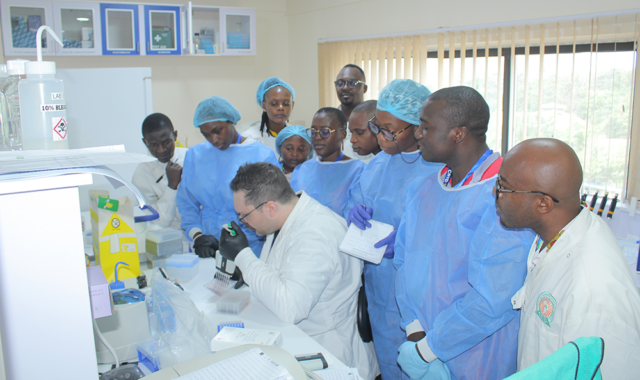
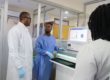
Jacob Sadler and participants during a lab session
The program focused on Nanopore Amplicon Sequencing and Molecular Inversion Probes (MIPs) for Plasmodium analyses, equipping scientists with cutting-edge skills to advance malaria surveillance and research. Participants included researchers from CRID, Centre Pasteur du Cameroun, and the University of Dschang, all local partners of the project, as well as two participants from the Institute of Genomics and Global Health (IGH) in Nigeria, another project partner. The training was delivered by experts from the University of North Carolina, USA.
Building Foundations in Amplicon Sequencing
The first week centered on amplicon sequencing using the Plasmodium falciparum Streamlined Multiplex Antimalarial Resistance and Relatedness Testing (PfSMARRTer) workflow and Molecular Inversion Probes (MIPs). Led by Jacob M. Sadler from the University of North Carolina – USA, participants explored both theoretical foundations and hands-on wet lab experiments. The week began with a comprehensive lecture introducing the principles of the PfSMARRTer approach, followed by intensive laboratory sessions where trainees carried out the protocol themselves. By the end of the week, participants had successfully amplified all samples using PfSMARRTer primer pools. They also completed library preparation. Dr. Sadler commended the group’s dedication, noting: “Each participant has brought their own talents to the table, and I am very impressed with this group. The amount of work we have accomplished would not be possible without their thorough participation.”
Advancing Skills with Illumina and Nanopore Technologies
The second week expanded into sequencing with Illumina MiSeq and NovaSeq 6000 platforms, alongside in-depth training on MIPs led by Dr. Karamoko Niaré, from Brown University – USA. Participants applied both Illumina and Oxford Nanopore MinION technologies to sequence Plasmodium falciparum drug-resistance genes and the circumsporozoite protein (CSP) gene. Beyond protocol execution, participants gained practical proficiency in next-generation sequencing technologies across both Illumina and Nanopore systems. This dual-technique approach significantly strengthens genomic analysis capacity and enhances pathogen surveillance capabilities.
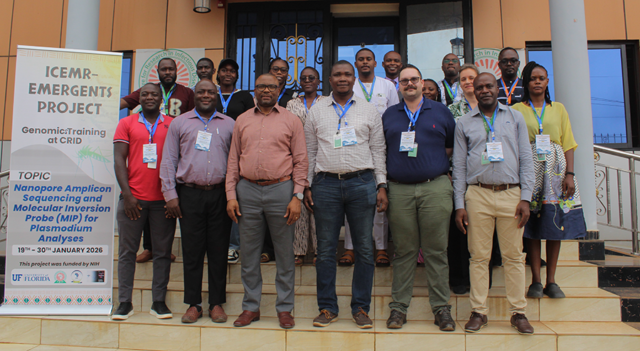
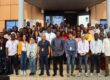
Family picture
Closing Ceremony
The training concluded with a ceremony presided over by the Co-Principal Investigator of the project, Prof. Charles Wondji, who emphasized the importance of applying these skills to strengthen malaria surveillance. He urged participants to ensure that the two weeks of training translate into tangible impact at their home institutions, stressing the need to deploy these insights effectively to establish robust surveillance systems and track resistance. All 16 participants received certification, marking the beginning of a growing network of genomic experts across Africa.