
On Thursday, July 3, 2025, Achille Jérome Binyang, former PhD student at CRID successfully defended his doctoral thesis at the Faculty of Science of the University of Yaoundé I.
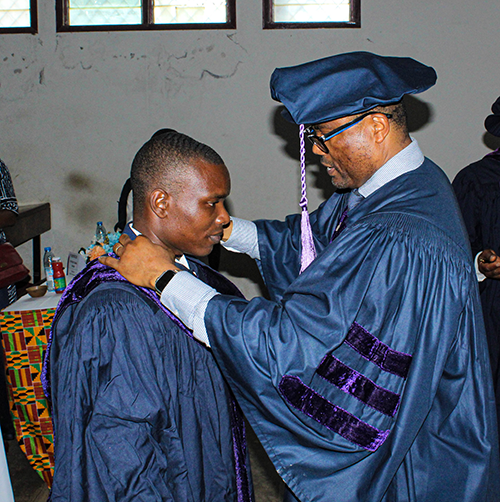
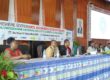
Dr. Binyang receiving his academic regalia from Prof. Wondji
Achille Binyang’s research focused on how mosquitoes that carry malaria parasites are becoming resistant to insecticides, and how mechanisms associated to this resistance might affect the way they transmit the disease. The title of his thesis was: “Insecticide Resistance Mechanisms: Impact on Salivary Gland Proteins and Malaria Parasite Invasion in Anopheles gambiae, Major Malaria Vectors in Cameroon. Given that mosquitoes use their saliva to help them feed on blood and to transmit malaria, Achille Binyang studied how insecticide resistance changes the make-up of mosquito saliva proteins and whether this affects how well they can spread malaria.
Methodology
Dr Binyang looked at how common insecticide resistance is in wild mosquito populations in Cameroon and what causes it. He then compared mosquitoes that were resistant to insecticides with those that weren’t, to see how their salivary proteins differed. Following this, he tested whether these differences affected how easily malaria parasites could enter the mosquitoes’ salivary glands. Achille Binyang’s key findings were that firstly, many mosquitoes in Cameroon are resistant to pyrethroids (insecticide used for bednets impregnation), and resistance to another type (carbamates) is growing. Secondly, resistance is linked to specific genetic changes, like the kdr (knockdown resistance) mutation-which helps mosquitoes survive insecticides- and Ace 1R (acetylcholinesterase resistance), found only in Anopheles gambiae in the equatorial zone of Cameroon.
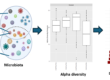
He noticed that resistant mosquitoes had different levels of certain salivary proteins. In fact, 238 genes were more active in resistant mosquitoes. Some of these proteins, like those from the D7 family (a group of salivary gland proteins found in blood-feeding mosquitoes) and a protein called Trio, are involved in feeding and malaria transmission. Mosquitoes without the kdr mutation were more likely to get infected with malaria parasites.
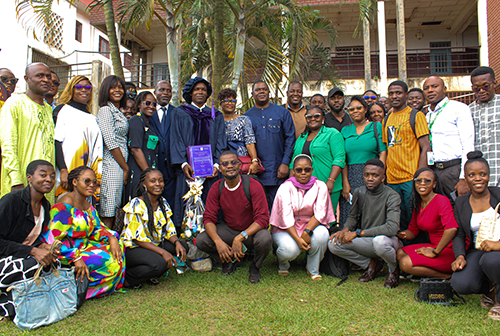
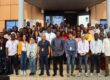
Family picture
In conclusion
Even though insecticide resistance is changing the biology of mosquitoes, they can still transmit malaria. This research helps us better understand how resistance works and how it might affect malaria control efforts. Dr. Binyang’s work was supported by a Wellcome Trust grant under the supervision of Dr. Elanga Emmanuel, Deputy Head of the Medical Entomology Department at CRID. A panel of seven experts, led by Prof. Mimpfoundi Remy, reviewed his thesis and awarded him high honors for his outstanding contribution.